AERIE
A digital experience for a collection of twelve cliff suites above Vĩnh Hy — where one horizon line directs both the brand story and the path to booking.
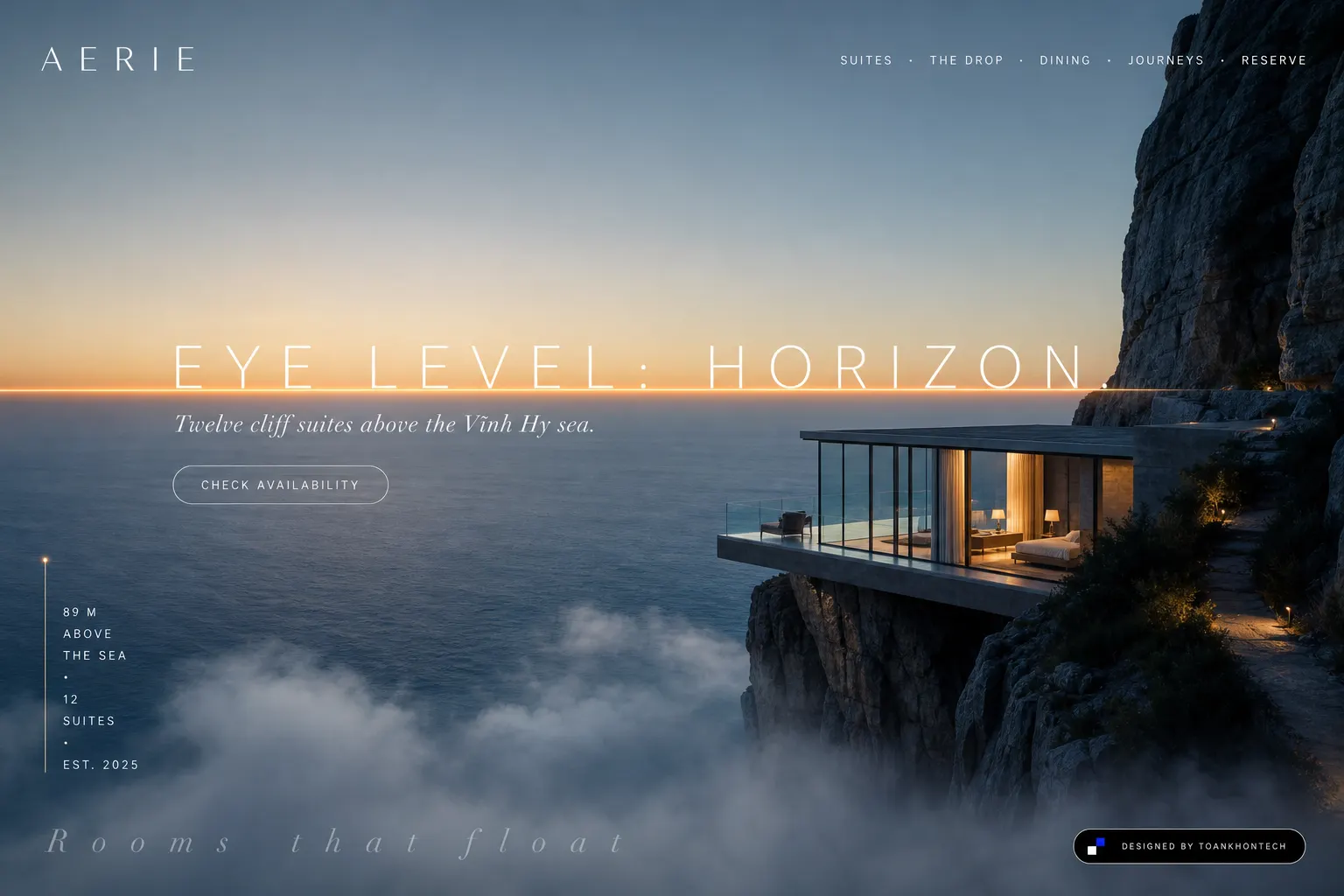
01 · Direction
A resort website should sell the feeling of a place before it sells a room.
Most hospitality websites open with room types, amenities and a booking button. AERIE reverses that order. The site begins with what belongs to this place alone: standing 89 metres above the sea, meeting the horizon at eye level and sleeping inside architecture held against the rock.
The design task was to translate that geographical advantage into a journey that reads instantly on screen. Imagery creates desire, copy resolves practical questions, and booking stays close without interrupting the view. The result is editorial in rhythm and commercial in structure.
“AERIE does not use the sea as scenery. The whole interface is organised around a single horizon.”
- Discipline
- Luxury resort website concept
- Setting
- Vĩnh Hy · Ninh Thuận · Vietnam
- Room offer
- 12 cliff suites · 3 room types
- UX objective
- Fast discovery · Direct booking
02 · Information architecture
Three stays, three reasons to choose — not a long comparison table.
Ledge Suite, Horizon Villa and Cave House are framed as three relationships with the terrain: cantilevered over the cliff, extended toward a private edge pool, or pulled back into the rock. Area and one defining feature sit beside each name, giving guests enough information to sort the options without leaving the visual narrative.
In production, every choice would lead to a room page with a gallery, plan, occupancy, policies and live availability. That structure serves the guest who is still imagining the trip and the guest already checking dates.
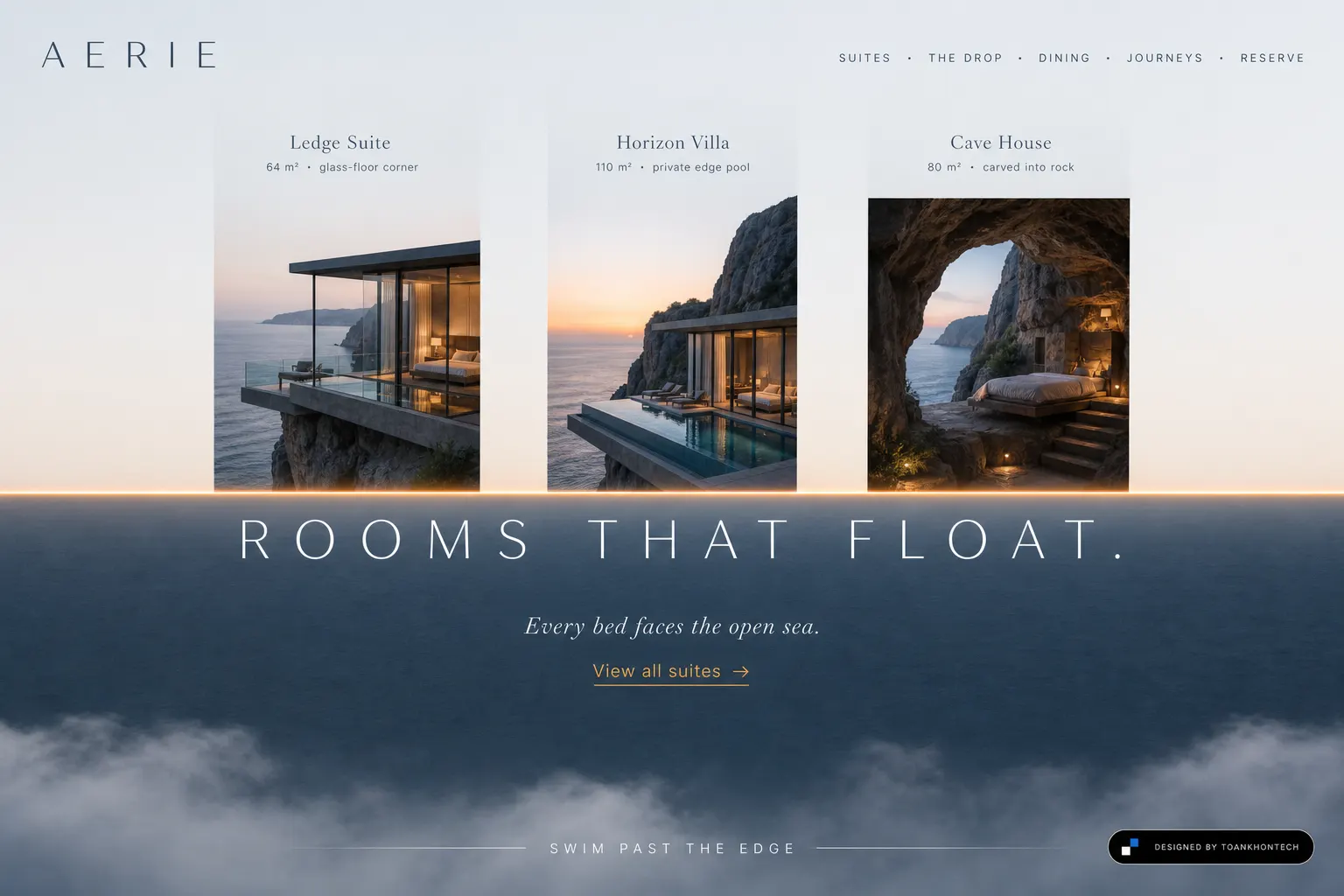
UX principle: shorten comparison time without flattening the emotion.
03 · Signature experience
“The Drop” turns a pool into a memorable brand asset.
Instead of calling it an infinity pool, the concept gives the experience a proper name: The Drop. A 27-metre saltwater span, dawn heating and an 89-metre cliff edge turn a familiar amenity into a precise story guests can remember and repeat.
It also becomes an anchor for content: a pool film, dawn swim sessions, stay packages and social stories can all return to the same name. The website is not merely displaying facilities; it is creating language the brand can operate with.
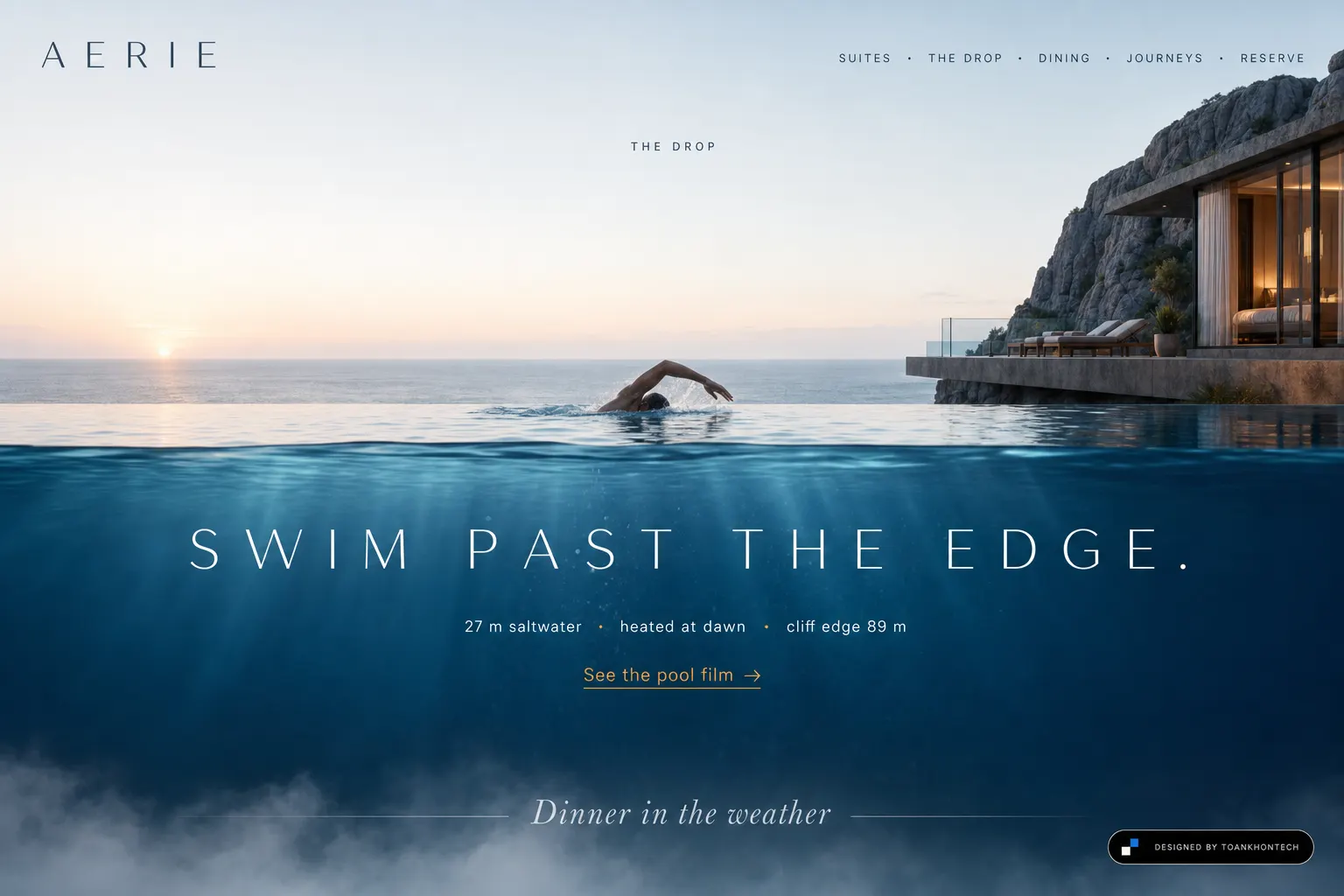
Content principle: name the experience guests will want to retell.
04 · Demand-making content
Dining is written as a timed moment, not a menu inventory.
“Seven courses, one sunset” compresses dinner into a promise with a rhythm. The chef’s counter time, cellar in the rock and reservation action supply the remaining facts. The sunset carries the emotion; the microcopy carries the decision.
A live version should connect seasonal menus, seating schedules, dietary requests and stay packages. More importantly, the writing must remain specific: what changes, which seats are scarce and what time makes the experience possible.
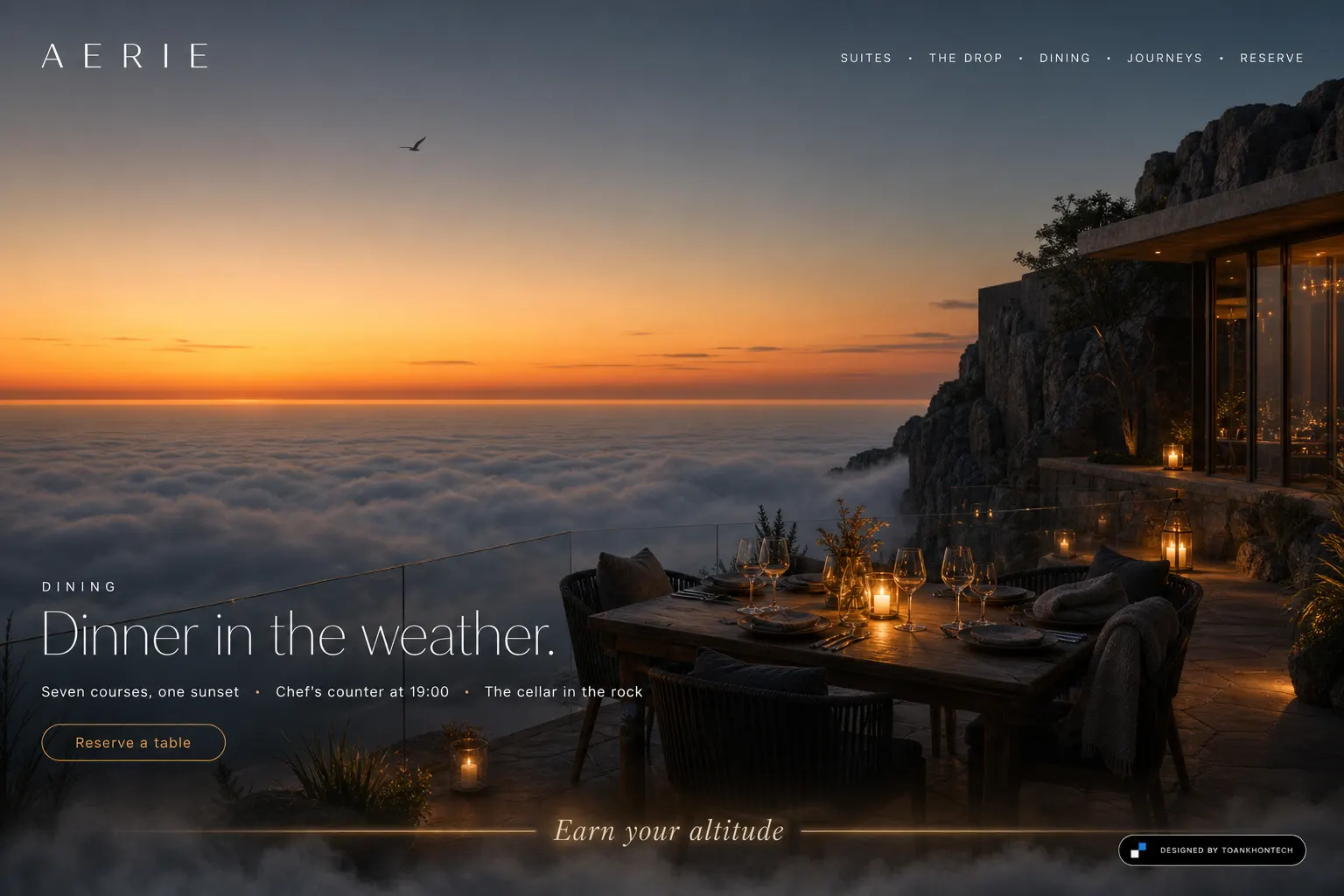
Conversion principle: give a concrete reason before asking for a reservation.
05 · Destination narrative
The journey continues beyond the room.
The room may be the item sold, but the destination is why someone travels. AERIE places dawn paragliding, via ferrata and sea-cave kayaking on a horizontal trail, widening the promise from “a beautiful place to stay” to “a sequence that can happen only here.”
Each activity has its own timing, effort and natural conditions. A production build would add detail pages, safety requirements, age limits, seasonal schedules and a way to attach an experience before or after the room booking.
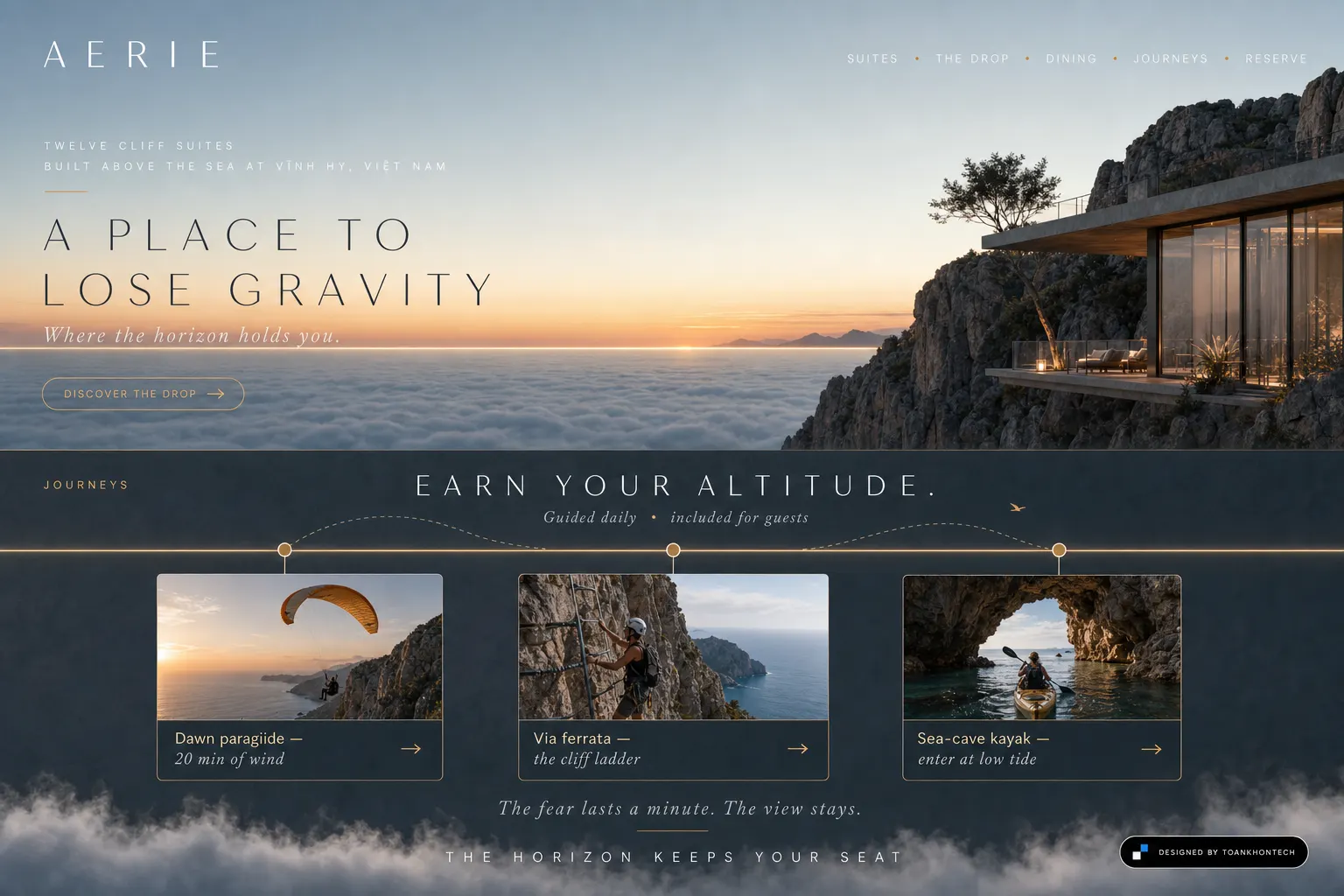
Brand principle: sell the reason to arrive, not only the place to sleep.
06 · Conversion architecture
Booking is unmistakable without interrupting the story.
The closing module gathers arrival, departure, guests and availability into one line. Visitors have already passed through rooms, water, dining and journeys before meeting the full form, so the action feels like the next step rather than an interruption.
In production, it must sync rates and inventory, preserve choices when a guest returns, disclose total cost early and handle sold-out states well. A beautiful funnel that hides fees or makes people re-enter details would spend all the trust the narrative has earned.
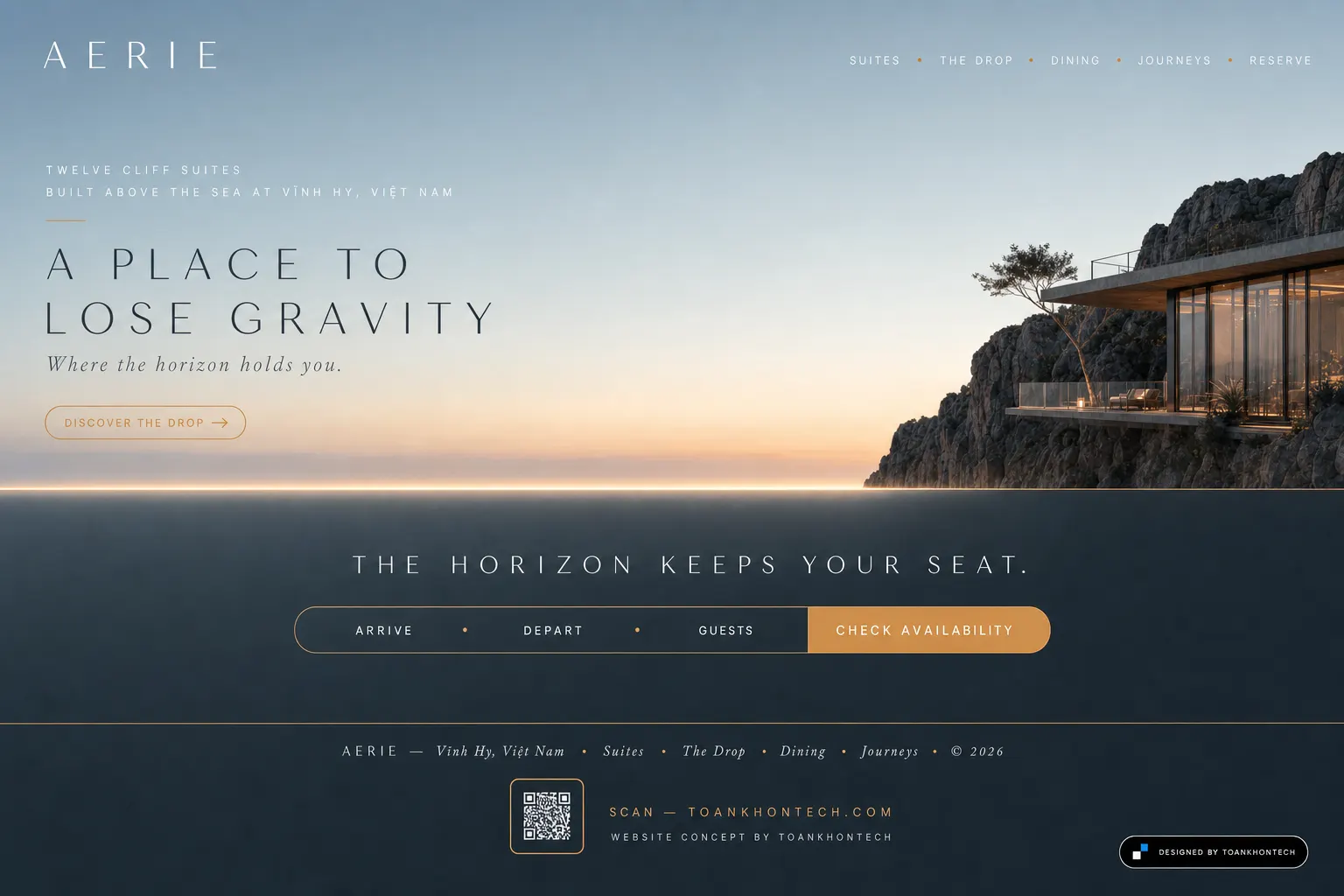
Commerce principle: remove friction once sufficient desire has been built.
07 · Design language
Two typographic registers, one horizon.
A light, widely tracked sans serif carries information; an italic editorial serif carries emotion. Stone and deep marine surfaces form the base, leaving the warmth of sunrise inside the photography as the only glow. The system does not decorate a landscape that already has presence.
- 01
The horizon is the grid
Rules, headings and section transitions share a horizontal datum, giving the page calm against the vertical cliff.
- 02
Daylight for choice, night for depth
Pale surfaces support comparison; deep marine panels hold moments that need focus, atmosphere and conversion.
- 03
Every line of copy has a job
Short text must locate the place, distinguish the offer or move a guest toward the next decision.
Concept palette
#f0f1ef
#e7ebec
#213544
#102431
#0a1b26
Cool neutrals, mineral blues and marine darks sampled from open water, limestone and the hour before sunrise.
08 · The production path
From visual concept to a resort website that can sell rooms.
Art direction is the first layer. A production build must connect the narrative to live inventory, content operations, performance and measurement without losing AERIE’s deliberate pace.
- 01
Live rates and availability
Integrate a PMS or booking engine for room types, packages, policies and sold-out states without sending guests into an unrelated interface.
- 02
An operational CMS
Let the team update seasons, menus, journeys, offers and translations without a code release for every small change.
- 03
Performance by network condition
Serve responsive imagery and video, prioritise the hero, defer the rest and protect Core Web Vitals on mobile connections.
- 04
Measurement and access
Measure the route from room discovery to rate check while maintaining contrast, keyboard access, useful alt text and resilient form states.
09 · Common questions
About AERIE and luxury resort websites.
- Who is AERIE designed for?
- Luxury travellers who choose a place before they choose a room. The site therefore opens with the view and the promise of location, then moves to suites and the direct booking step.
- How is a concept like AERIE different from a visual mockup?
- The concept includes positioning, information architecture, user journey, conversion logic and operational direction. The mockups are the visible expression of those decisions.
- Could AERIE be developed into a real website?
- Yes. Its art direction and page system can become responsive templates, a multilingual CMS and a booking flow connected to a PMS. Content, inventory and operating requirements would be adapted to the real property.
- What helps a resort website perform in organic search?
- Useful pages for rooms and experiences, grounded destination content, structured data, optimised media, strong speed, clear internal links and consistent facts about location, rates, policies and availability.
More in hospitality
Other ways to frame travel and place.

From idea to product
Do you have a place that an ordinary website cannot explain?
We can shape its story, experience architecture and technical system into a digital journey built to convert.