SCORELAB IELTS
SCORELAB IELTS rejects the language of exam tricks. It treats score as the outcome of diagnosis, realistic conditions, and a feedback cycle consistent enough for every error to be named.
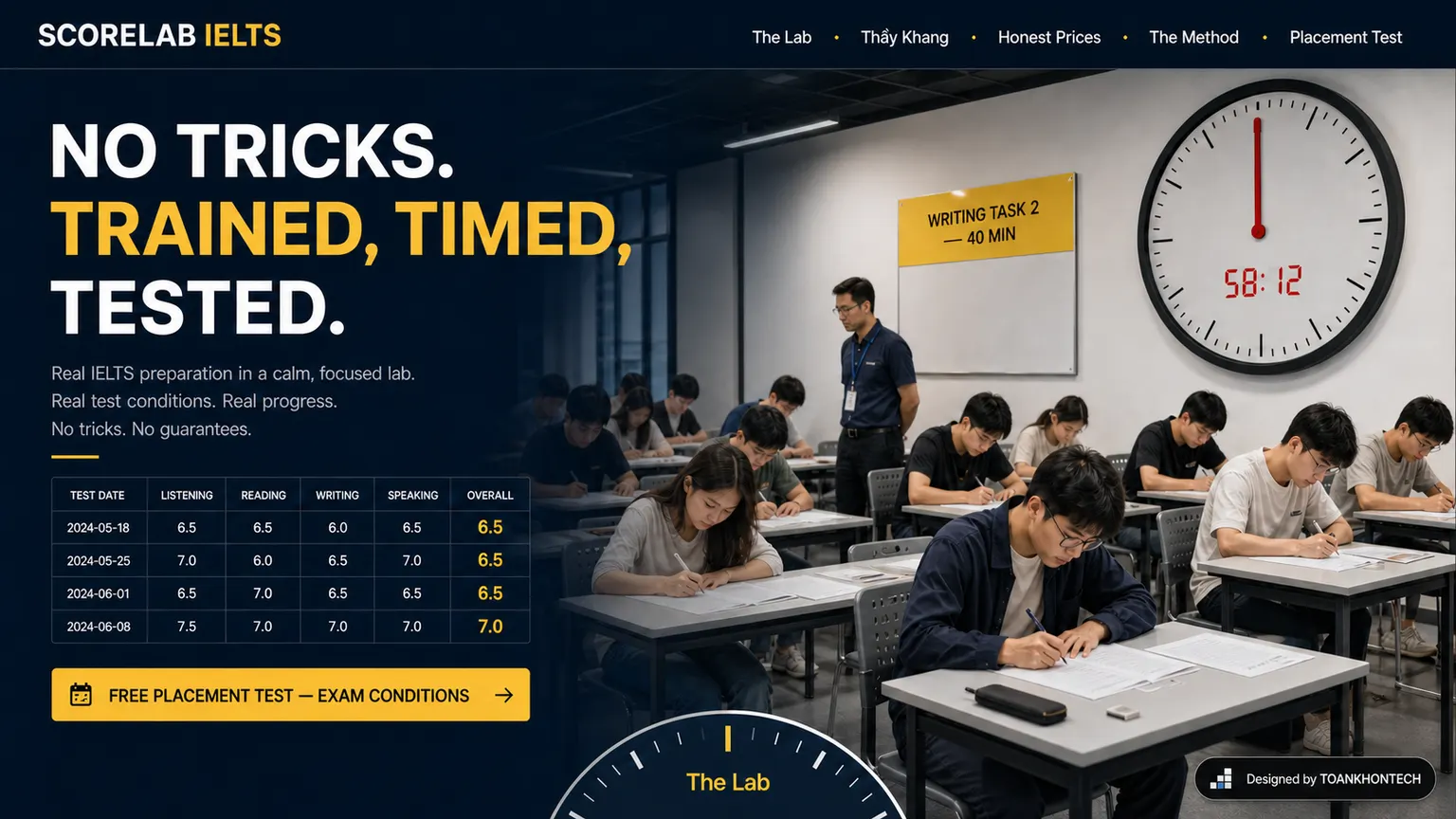
01 · Direction
No tricks. Train under real conditions.
A mock room, Thầy Khang, the fee ledger, and a five-bell week form an accountable learning dashboard. Navy and yellow foreground data; every number carries scope and date.
Enrolment begins with a free placement test, target, exam date, and available self-study time. Advice follows a sample, never an outcome guarantee.
“SCORELAB markets through a method people can inspect: every target band becomes skills, practice hours, and marking criteria, while every promise stops before a guaranteed score.”
- Format
- education programme website concept
- Audience
- Curious students and parents looking for visible learning proof
- Primary proof
- Student work, pathways, mentors, and feedback
- Primary action
- Choose a programme and book a trial class
02 · visitor space
Build the lab around the pressure of test day.
Mock Room, Marking Desk, and Speaking Booths reproduce timing, sound, and submission. Learners practise the skill and the ability to operate themselves under a clock.
The space explains why a centre adds value beyond video: real conditions expose real errors, and only real errors can be corrected.
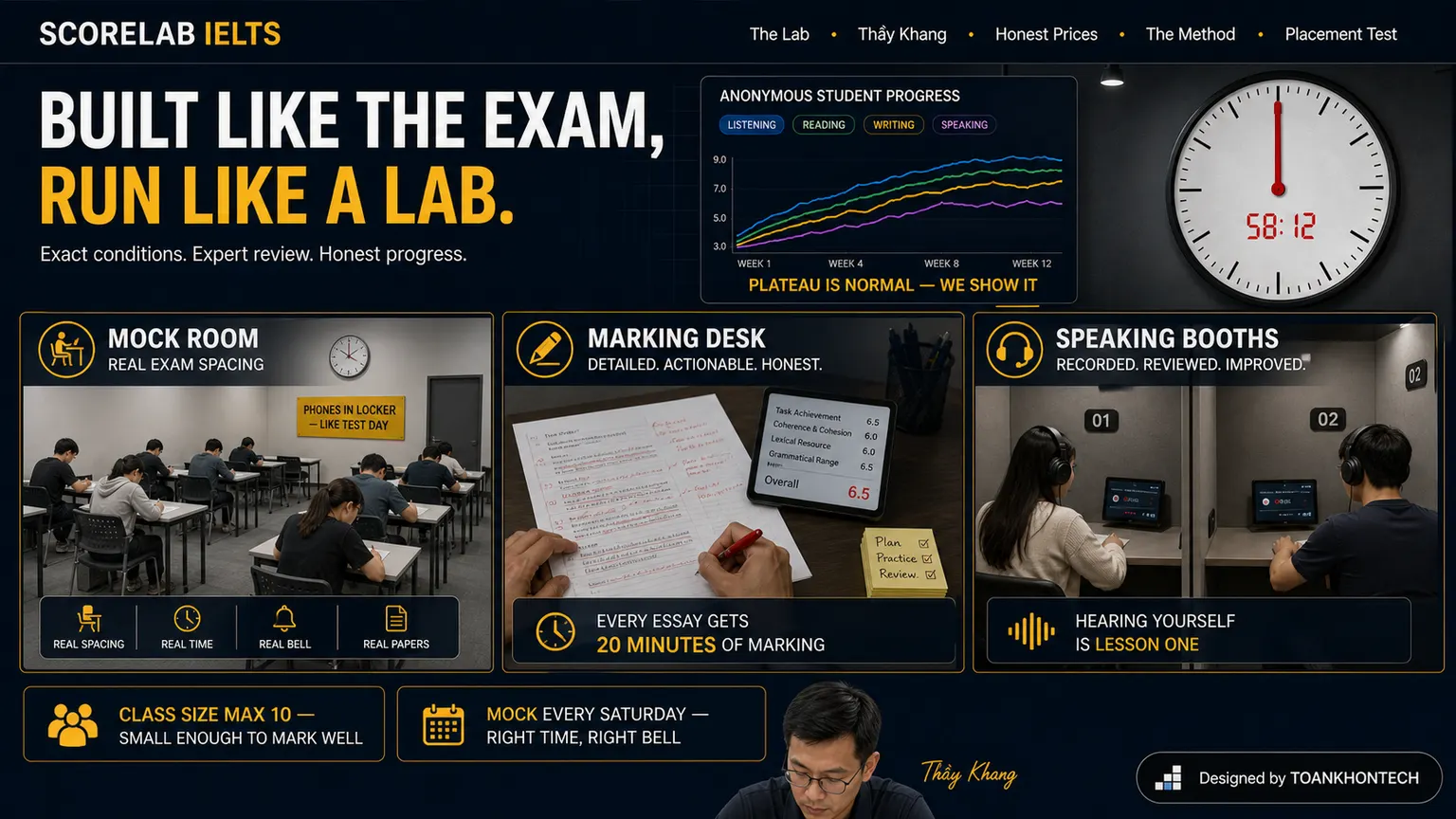
Do not promise calm; provide a place to practise it.
03 · Story
Thầy Khang marks the reason a score stopped moving.
The tutor profile sits beside annotated writing, speaking notes, and a retest date. Personal achievement steps behind the ability to name one error a learner can change next week.
Sample outcomes include timing and starting point, preventing one fast learner from becoming a standard that makes everyone else feel behind.

Good feedback must become the next piece of work.
04 · Prices
Tuition tied to real marking hours.
Foundation, band intensive, and standalone mock test state sessions, class size, marked submissions, and repeat rights. Scholarship and discount conditions remain clear without confusing base cost.
The question shifts from which course is cheapest to which feedback depth fits—the variable that actually shapes exam preparation.
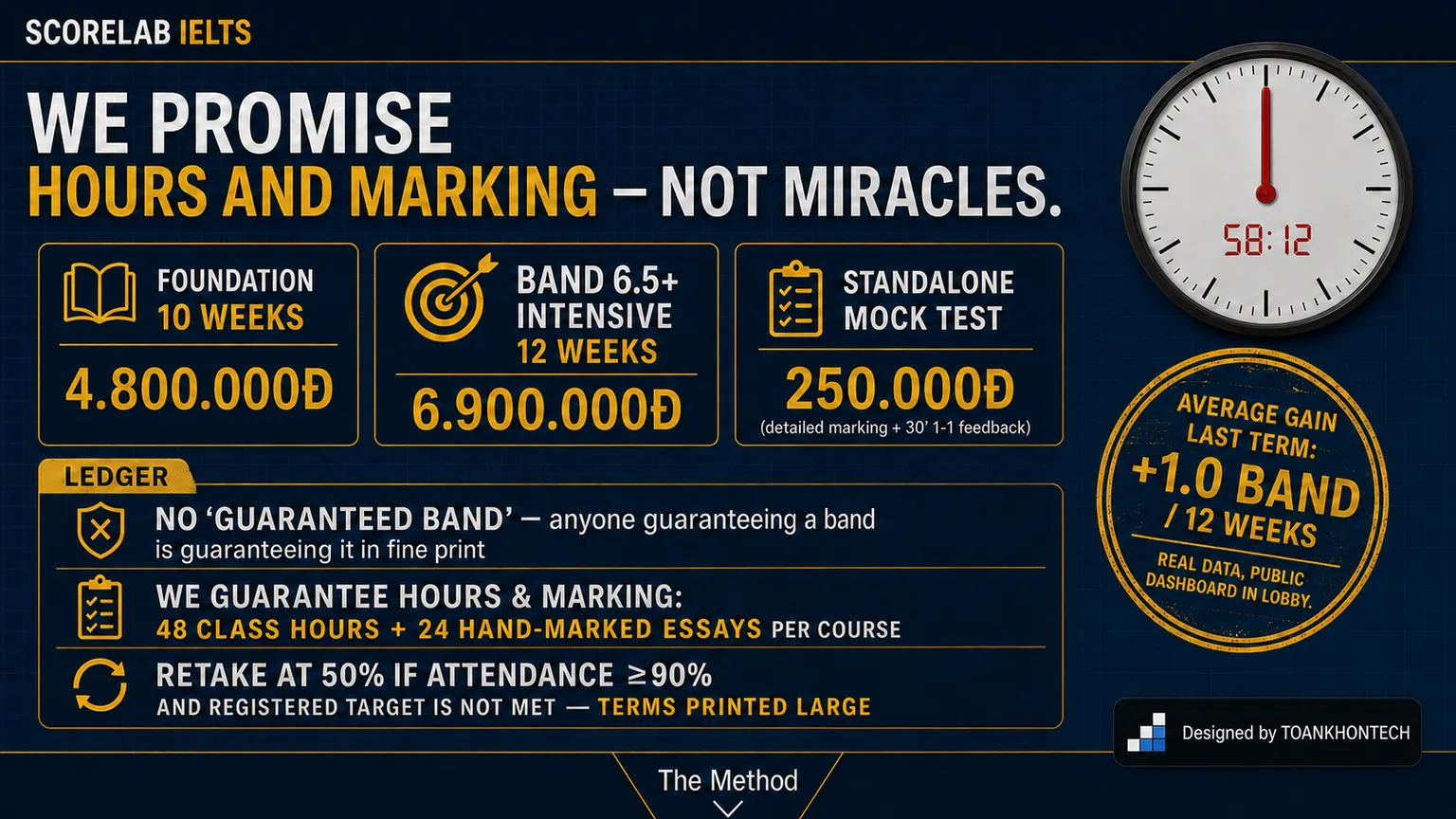
Tuition should reveal who reads the learner's work and how often.
05 · Experience
One week, five bells, no shortcut.
Reading, listening, marking, speaking, and mock form a rhythm with rest and independent work. The calendar exposes workload before payment.
In production, it can coordinate reminders, result return, and overload warnings; retention comes from a sustainable study rhythm rather than nagging notifications.
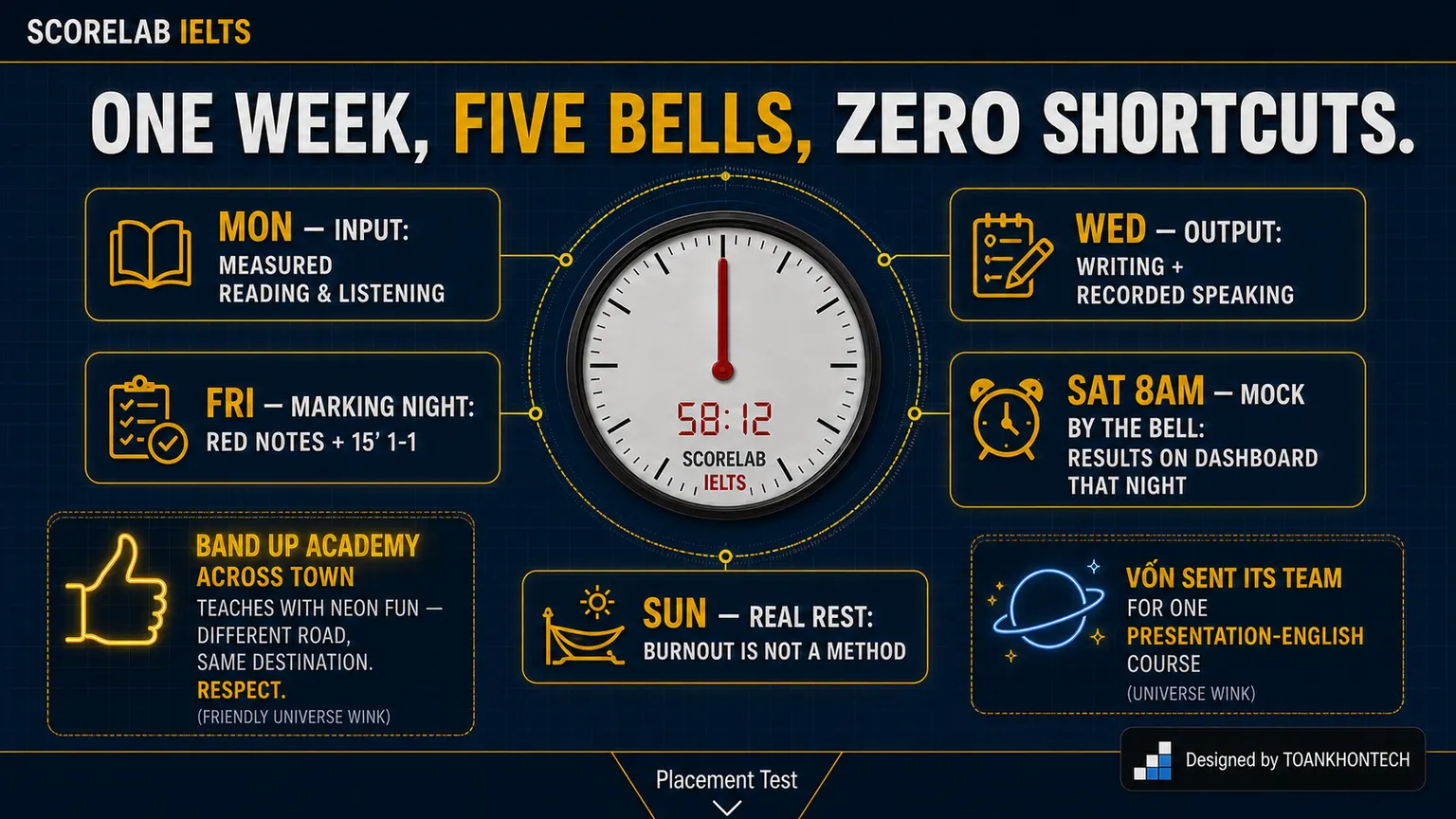
A strong pathway lets learners see their week before their band.
Design language
Recognise SCORELAB IELTS before the logo has to appear.
The design language follows a technical console treatment, the concept palette, and its native image rhythm. The goal is not novelty in every section but a small set of rules strong enough to support new content.
- 01
Contrast with a job
Accent colour is reserved for attention and primary action; background, type, and imagery stay stable so SCORELAB IELTS never becomes noise.
- 02
An industry-specific rhythm
Image ratio, paragraph length, and headline placement follow how people actually explore an education programme website, not a universal portfolio template.
- 03
Evidence before invitation
Student work, pathways, mentors, and feedback arrives before the CTA, making action a reasonable consequence of the story rather than an interruption.
Colour system
#001020
#182838
#d0c8c8
#b8b0b0
#a09898
Colours come directly from SCORELAB IELTS's art direction. Production should validate WCAG contrast for copy, interaction states, and charts instead of assigning every colour equal weight.
Production direction
Turn the concept into a system with content, data, and clear ownership.
The visual design is an opening hypothesis. A live version must be tested with real content, real behaviour, and the technical constraints of the team that will maintain it.
- 01
Inventory content and data
Identify the source, update cadence, and approver for student work, pathways, mentors, and feedback before finalising page architecture.
- 02
Prototype the primary flow
Test “Choose a programme and book a trial class” on real devices, including missing data, failure, and interrupted-return states.
- 03
Performance and access
Serve images at display size, preserve semantic HTML, support keyboard use, and respect reduced motion so the experience does not require powerful hardware.
- 04
Measure what matters
Track programme views, trial bookings, and completed enrolment profiles, exclude internal traffic, and agree event definitions before interpreting results.
Frequently asked questions
Questions to resolve before producing SCORELAB IELTS.
- Who is SCORELAB IELTS designed for?
- Curious students and parents looking for visible learning proof. Every layout decision serves one primary action: choose a programme and book a trial class.
- Why does this detail page differ from the other concepts?
- The technical console treatment follows how people explore an education programme website, its information density, and its particular visual language.
- Could the concept become a real website?
- Yes, after replacing assumptions with real content, data, legal requirements, and the organisation's “Choose a programme and book a trial class” process.
- How should effectiveness be measured?
- A useful starting set is programme views, trial bookings, and completed enrolment profiles; final targets must follow the real operating model.
Continue exploring
More concepts in the field, each with a different answer.



From concept to product
Have an idea that needs to become a real website?
ToanKhonTech can shape positioning, content architecture, conversion flow, and an interface system for your actual context—without copying a concept wholesale.