TIỆM BÁNH BAN MAI
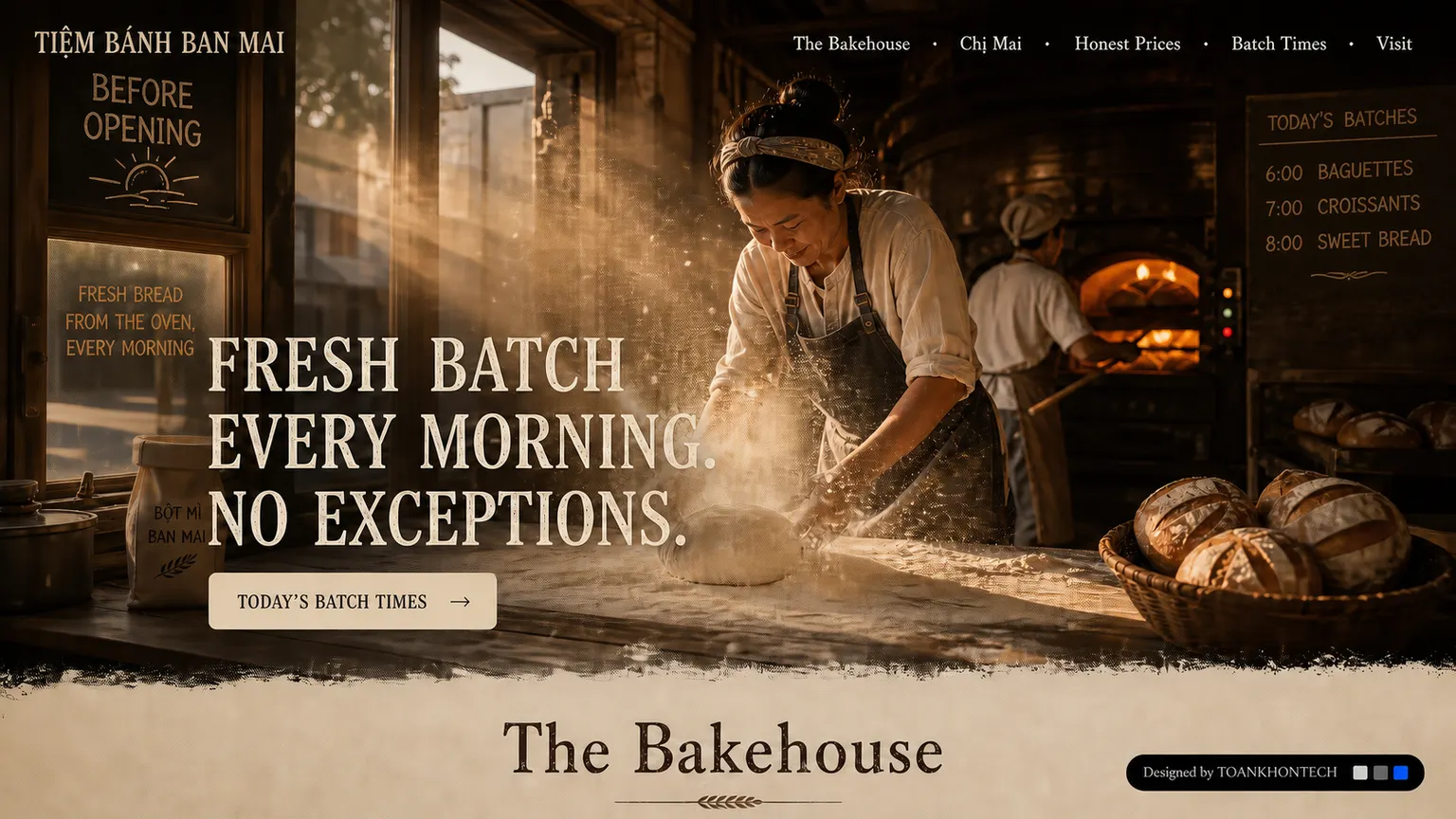
TIỆM BÁNH BAN MAI places its promise in time rather than adjectives: the first batch lands at six, and what sells today does not return to the counter tomorrow morning.
01 · Direction
Every morning is a deadline you can smell.
Three stations, Chị Mai, a chalk ledger, and the batch timetable create a site with flour, butter, and discipline. Morning light supplies feeling; the oven schedule supplies proof.
Guests see the next batch, reserve limited quantities, or place event orders by collection time. The system refuses excess capacity rather than sacrificing quality for one more sale.
“BAN MAI turns freshness into visible operation. Product never pretends to be permanently available; finite quantity and oven time create the reason to arrive.”
- Format
- accessible food brand website concept
- Audience
- Guests who need menu, price, place, and ordering clarity
- Primary proof
- Signature dishes, kitchen process, provenance, and atmosphere
- Primary action
- Find a store, reserve, or order
02 · visitor space
Three stations, one unbroken line of dough.
The Bench, The Oven, and The Counter connect preparation, baking, and sale in one sightline. Flour in morning light becomes meaningful when guests also understand who is working and which batch is near completion.
An open bakehouse turns process into service: waiting gains context and quality can be observed rather than claimed.
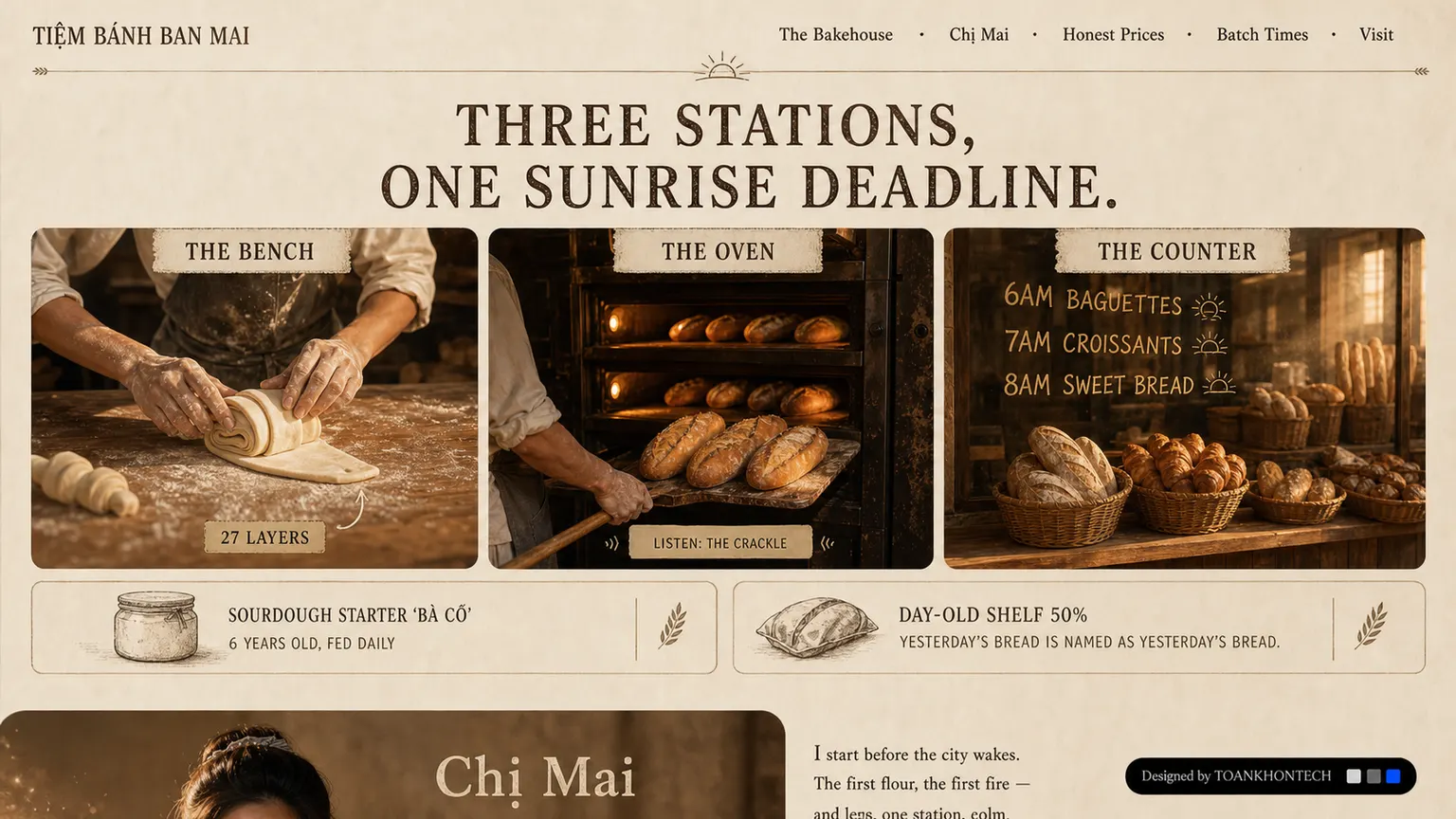
Let the oven explain the word fresh.
03 · Story
Chị Mai measures work in 3:30 batches.
The founder story follows mixing time, starter care, and the decision to stop taking orders when the bench is full. Family warmth sits beside real production limits.
This is a business portrait, not sentiment alone: commitment is proven by rules that may lose an order but protect the bread.
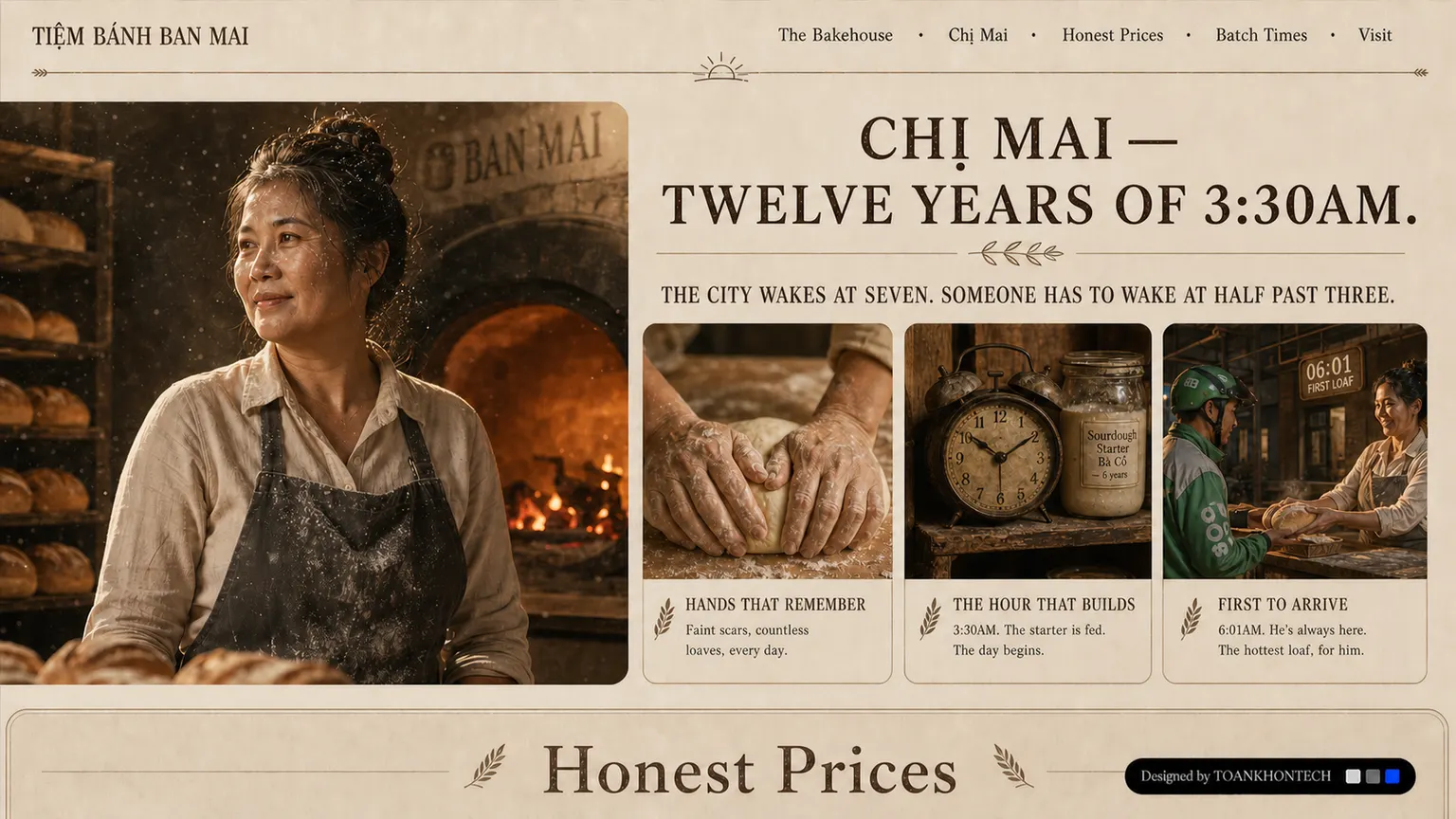
The shop's authority lives in what its maker refuses to shorten.
04 · Prices
Prices change only when the ingredients do.
Baguette, croissant, sourdough, and yesterday's loaf have clear places with weight and waste-reduction policy. Decorative boxes never distract from which bread a guest is buying.
A short ledger keeps product focused and supports search by item, neighbourhood, and opening hour without manufacturing a bloated catalogue.
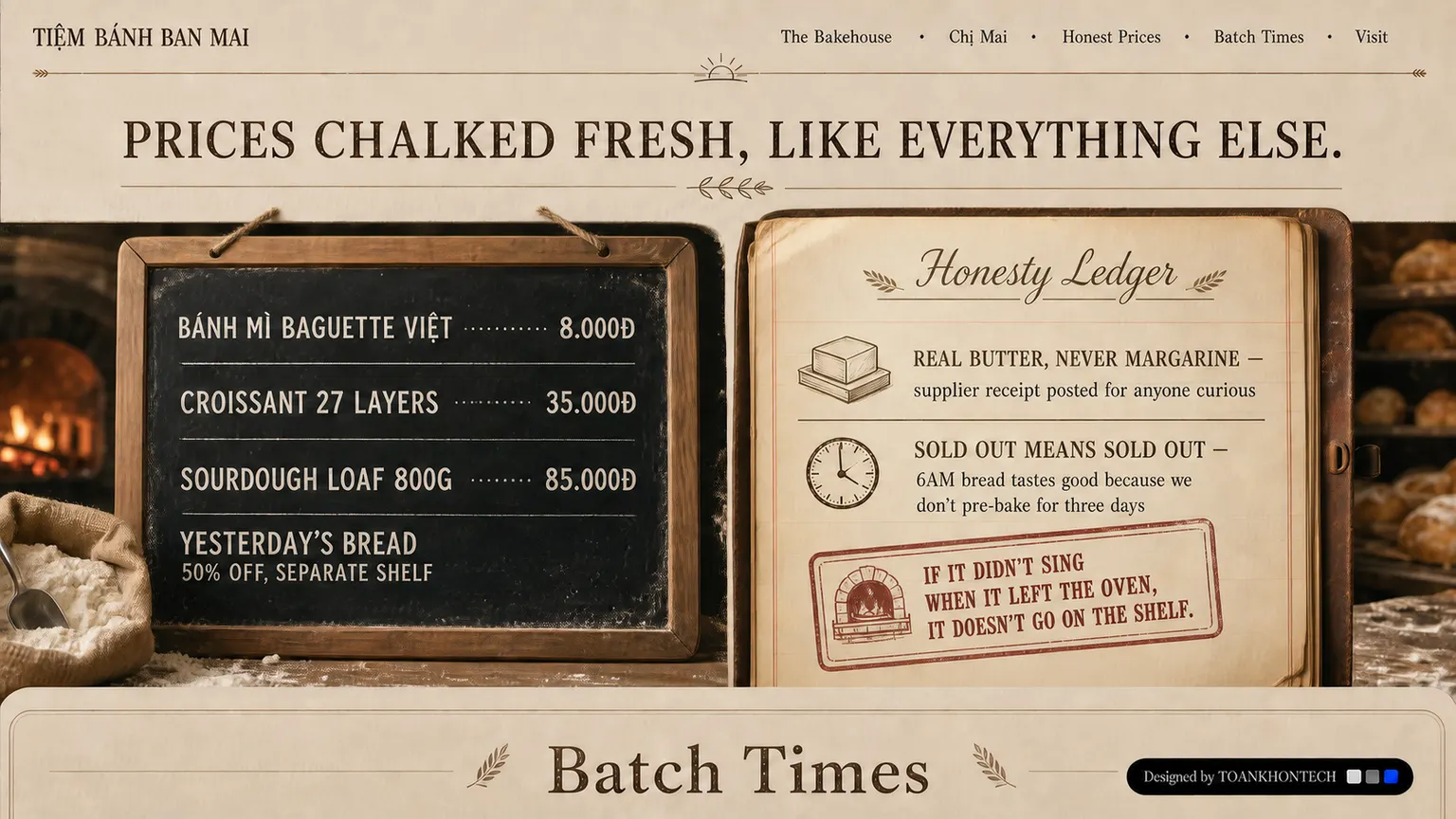
Fewer choices, with enough information in every one.
05 · Experience
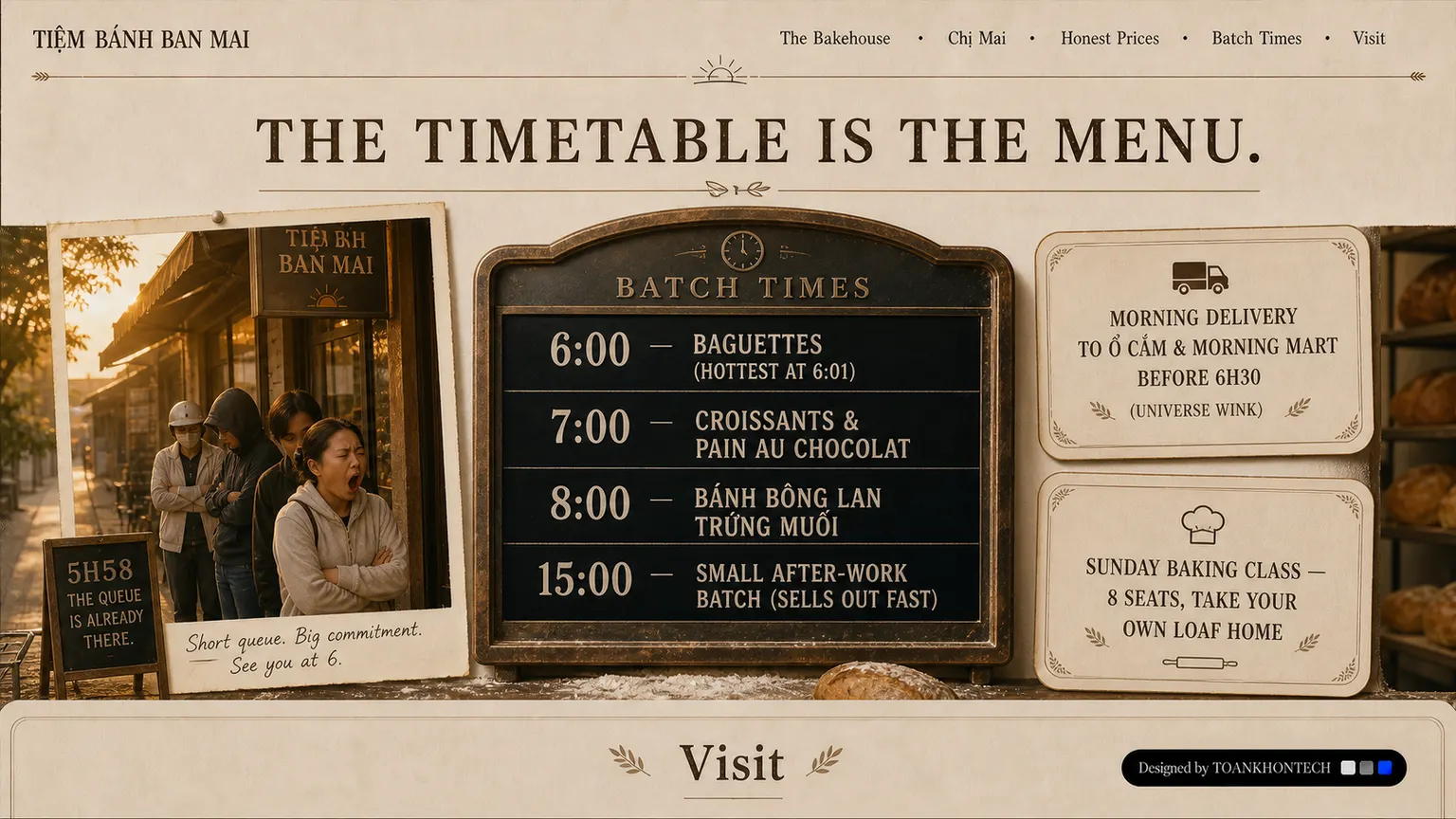
The timetable is the menu.
Six, seven, eight, ten, and three show what just emerged and what can still be held. Guests plan around the oven instead of scrolling a menu that pretends everything is always ready.
In production, live batch status can reduce calls, prevent cancellations, and build return habit without constant discounting.
Turn production rhythm into a reason to return.
Design language
Recognise TIỆM BÁNH BAN MAI before the logo has to appear.
The design language follows an asymmetric editorial treatment, the concept palette, and its native image rhythm. The goal is not novelty in every section but a small set of rules strong enough to support new content.
- 01
Contrast with a job
Accent colour is reserved for attention and primary action; background, type, and imagery stay stable so TIỆM BÁNH BAN MAI never becomes noise.
- 02
An industry-specific rhythm
Image ratio, paragraph length, and headline placement follow how people actually explore an accessible food brand website, not a universal portfolio template.
- 03
Evidence before invitation
Signature dishes, kitchen process, provenance, and atmosphere arrives before the CTA, making action a reasonable consequence of the story rather than an interruption.
Colour system
#080000
#d0b8a0
#302010
#503820
#907050
Colours come directly from TIỆM BÁNH BAN MAI's art direction. Production should validate WCAG contrast for copy, interaction states, and charts instead of assigning every colour equal weight.
Production direction
Turn the concept into a system with content, data, and clear ownership.
The visual design is an opening hypothesis. A live version must be tested with real content, real behaviour, and the technical constraints of the team that will maintain it.
- 01
Inventory content and data
Identify the source, update cadence, and approver for signature dishes, kitchen process, provenance, and atmosphere before finalising page architecture.
- 02
Prototype the primary flow
Test “Find a store, reserve, or order” on real devices, including missing data, failure, and interrupted-return states.
- 03
Performance and access
Serve images at display size, preserve semantic HTML, support keyboard use, and respect reduced motion so the experience does not require powerful hardware.
- 04
Measure what matters
Track store searches, order starts, and completed reservations, exclude internal traffic, and agree event definitions before interpreting results.
Frequently asked questions
Questions to resolve before producing TIỆM BÁNH BAN MAI.
- Who is TIỆM BÁNH BAN MAI designed for?
- Guests who need menu, price, place, and ordering clarity. Every layout decision serves one primary action: find a store, reserve, or order.
- Why does this detail page differ from the other concepts?
- The asymmetric editorial treatment follows how people explore an accessible food brand website, its information density, and its particular visual language.
- Could the concept become a real website?
- Yes, after replacing assumptions with real content, data, legal requirements, and the organisation's “Find a store, reserve, or order” process.
- How should effectiveness be measured?
- A useful starting set is store searches, order starts, and completed reservations; final targets must follow the real operating model.
Continue exploring
More concepts in the field, each with a different answer.


From concept to product
Have an idea that needs to become a real website?
ToanKhonTech can shape positioning, content architecture, conversion flow, and an interface system for your actual context—without copying a concept wholesale.