XƯỞNG BIA CHẠM
XƯỞNG BIA CHẠM treats the clink as the smallest social unit: one gesture capable of turning a shared table of strangers into tonight's familiar faces.
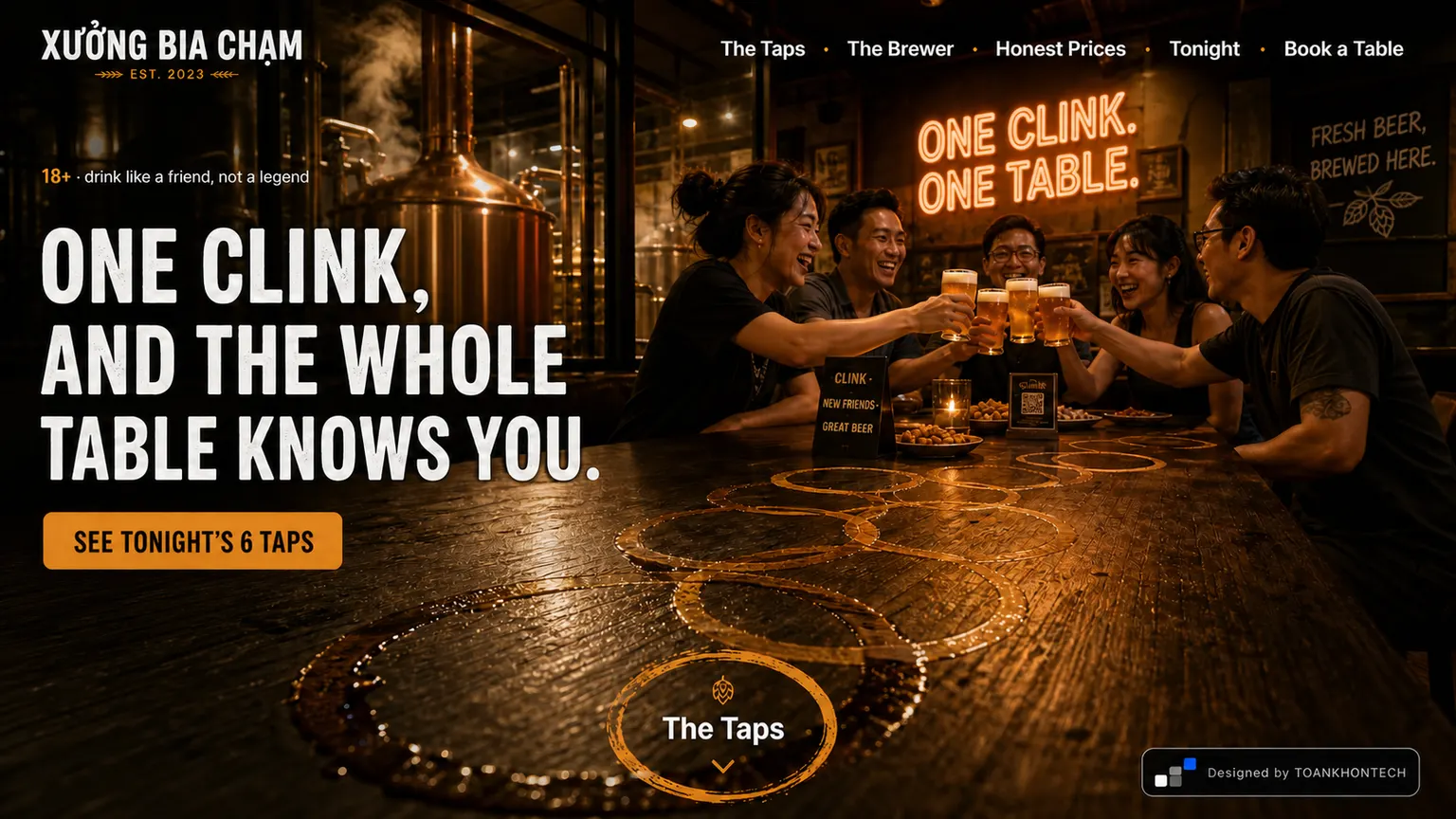
01 · Direction
One clink opens the table. Good operation keeps the night in rhythm.
A tap map, brewer, honest pint ledger, and night timeline form an operating system for the bar. Warm neon creates atmosphere; visible limits and alcohol information keep the brand adult.
Table booking prioritises party, arrival, and occasion. Beer can be filtered by ABV, flavour, and serve, while water and food remain present in the same choice flow.
“BIA CHẠM never sells excess as personality. It sells a meeting place with brewed-on-site beer, explicit limits, and enough detail for both enthusiasts and first-time drinkers to choose well.”
- Format
- accessible food brand website concept
- Audience
- Guests who need menu, price, place, and ordering clarity
- Primary proof
- Signature dishes, kitchen process, provenance, and atmosphere
- Primary action
- Find a store, reserve, or order
02 · visitor space
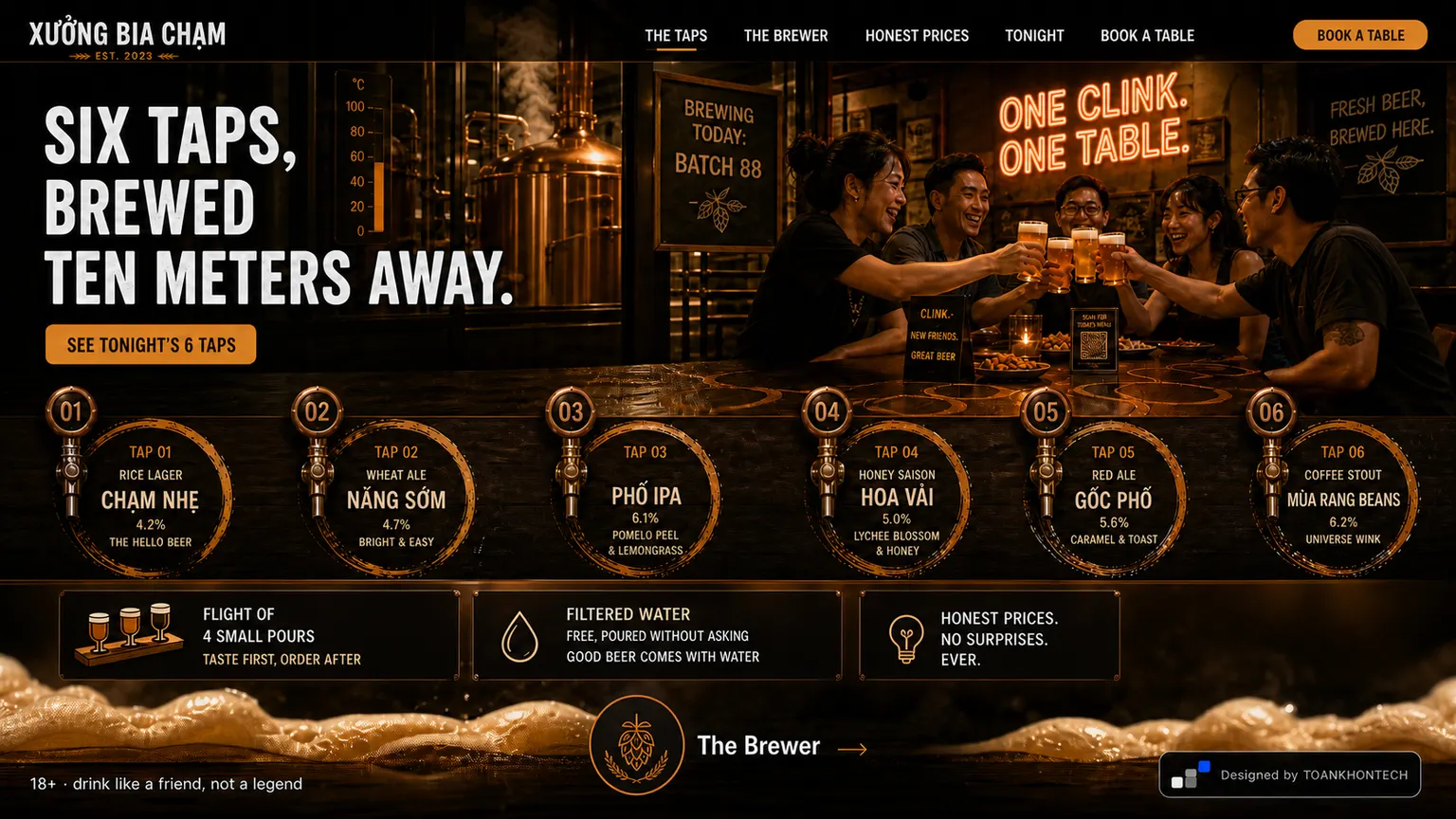
Twelve taps without an entrance exam.
The map groups beer by body, bitterness, and strength rather than style name alone. Each tap carries a short description, suggested serve, and food pairing for decisions made at the bar.
The system keeps depth for enthusiasts without turning knowledge into a social barrier. It is a shared table before it is a tasting test.
A good menu helps people order well without exposing what they do not know.
03 · Story
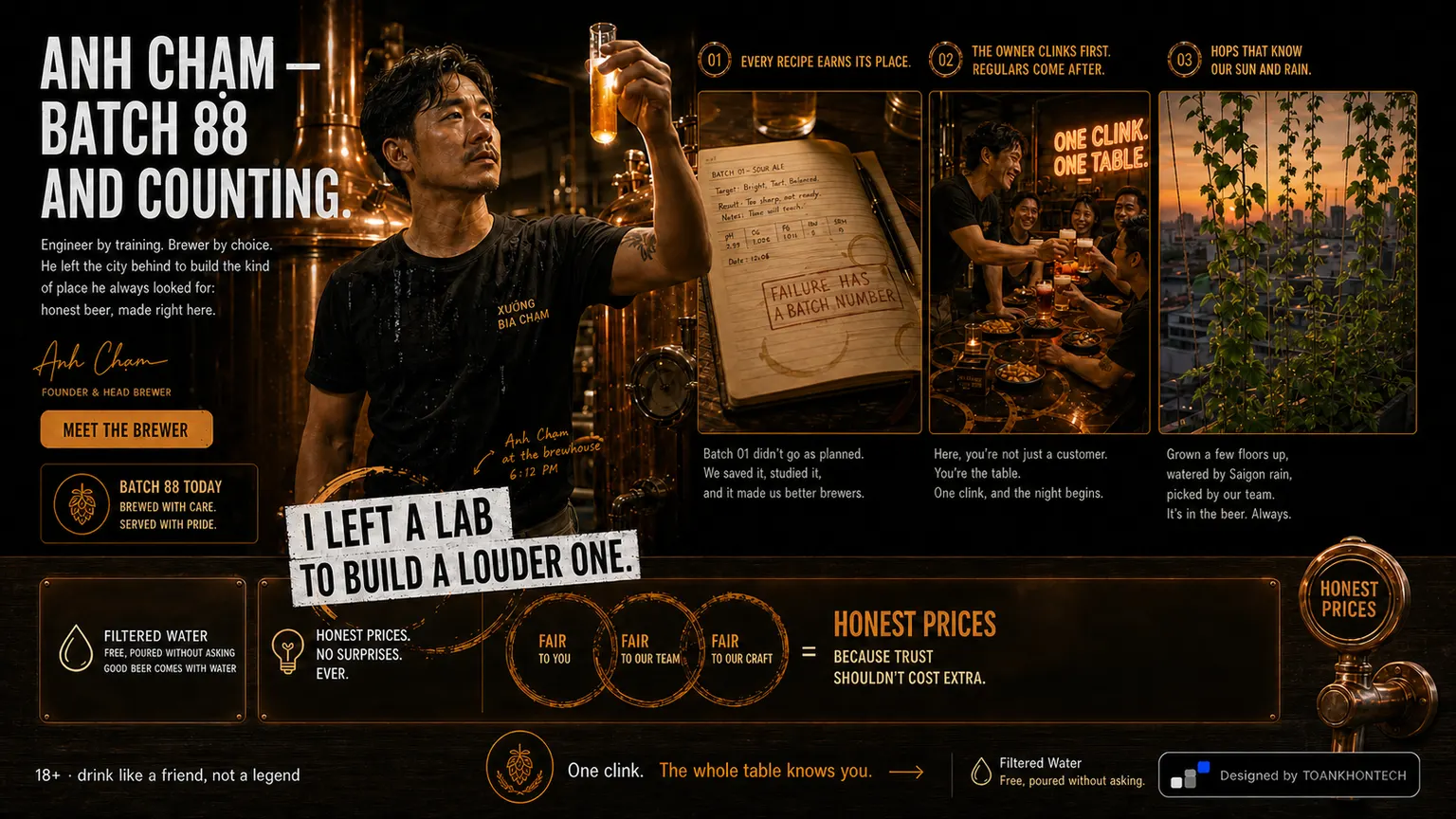
A brewer behind every turn of the batch.
Yeast, temperature, brew date, and the decision to dump a failed batch belong to a named maker. Technical story sits inside the life of the bar rather than in a sterile about page.
Once a person's name sits beside quality responsibility, craft beer moves beyond the generic handmade language available to any bottle.
Put the brewer's signature beside the batch data.
04 · Prices
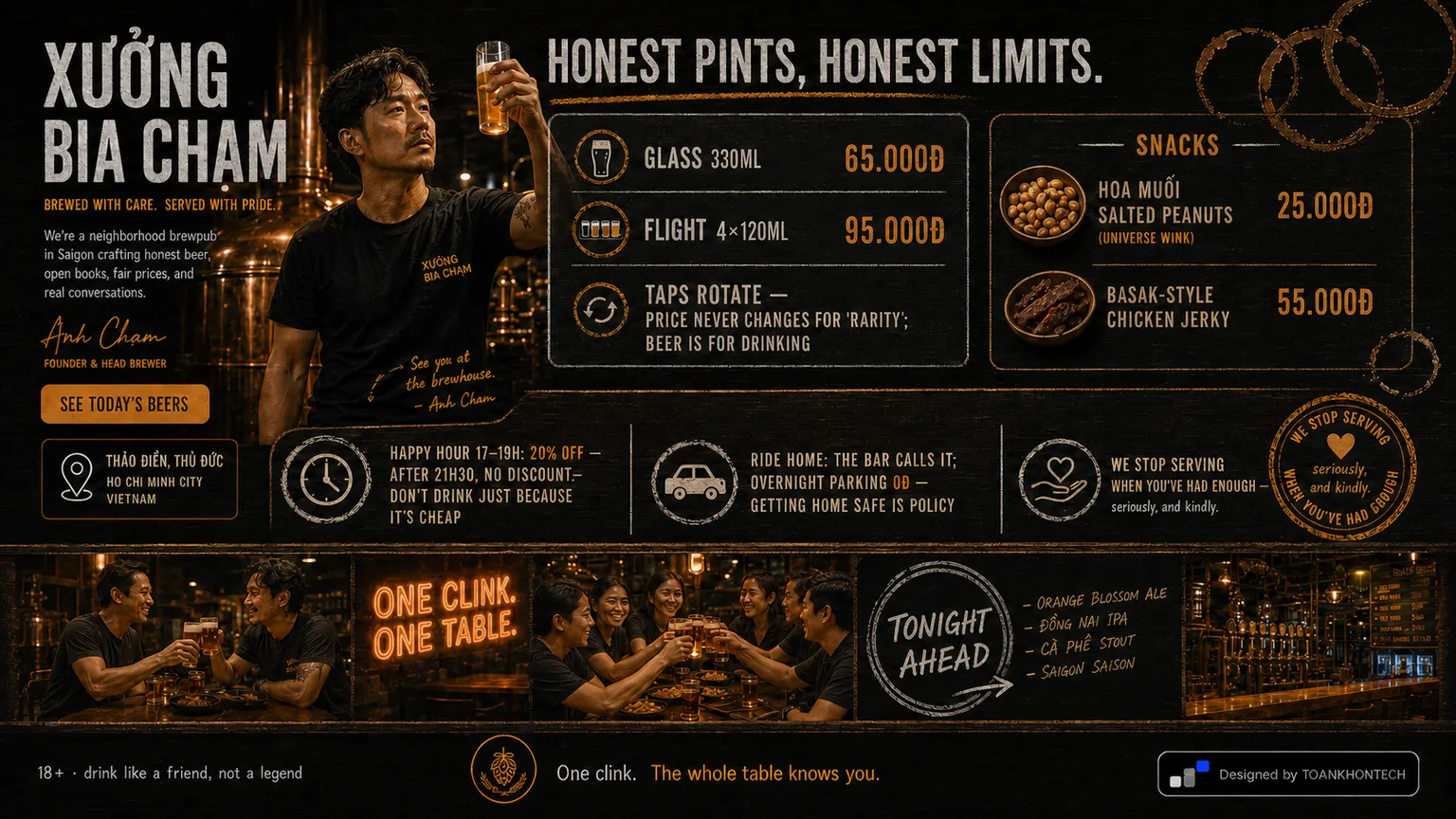
An honest pint needs both price and limit.
Serve, ABV, and price share one line; flights, alcohol-free drinks, and food receive equal visual status. There is no default size-up or language treating more alcohol as victory.
This is responsible marketing design: improve the choice, not alcohol volume at any cost.
Long-term revenue comes from a night people want to repeat.
05 · Experience
The table finds its own rhythm after dark.
First pint, food, conversation, and last call are described through time rather than promotion. A group knows when the kitchen closes, when music changes, and how to leave safely.
Operational information becomes hospitality, sparing guests from reconstructing a night across three social channels.
A good night is designed at its beginning and its end.

Design language
Recognise XƯỞNG BIA CHẠM before the logo has to appear.
The design language follows a menu-led narrative treatment, the concept palette, and its native image rhythm. The goal is not novelty in every section but a small set of rules strong enough to support new content.
- 01
Contrast with a job
Accent colour is reserved for attention and primary action; background, type, and imagery stay stable so XƯỞNG BIA CHẠM never becomes noise.
- 02
An industry-specific rhythm
Image ratio, paragraph length, and headline placement follow how people actually explore an accessible food brand website, not a universal portfolio template.
- 03
Evidence before invitation
Signature dishes, kitchen process, provenance, and atmosphere arrives before the CTA, making action a reasonable consequence of the story rather than an interruption.
Colour system
#100800
#402000
#282828
#606060
#804010
Colours come directly from XƯỞNG BIA CHẠM's art direction. Production should validate WCAG contrast for copy, interaction states, and charts instead of assigning every colour equal weight.
Production direction
Turn the concept into a system with content, data, and clear ownership.
The visual design is an opening hypothesis. A live version must be tested with real content, real behaviour, and the technical constraints of the team that will maintain it.
- 01
Inventory content and data
Identify the source, update cadence, and approver for signature dishes, kitchen process, provenance, and atmosphere before finalising page architecture.
- 02
Prototype the primary flow
Test “Find a store, reserve, or order” on real devices, including missing data, failure, and interrupted-return states.
- 03
Performance and access
Serve images at display size, preserve semantic HTML, support keyboard use, and respect reduced motion so the experience does not require powerful hardware.
- 04
Measure what matters
Track store searches, order starts, and completed reservations, exclude internal traffic, and agree event definitions before interpreting results.
Frequently asked questions
Questions to resolve before producing XƯỞNG BIA CHẠM.
- Who is XƯỞNG BIA CHẠM designed for?
- Guests who need menu, price, place, and ordering clarity. Every layout decision serves one primary action: find a store, reserve, or order.
- Why does this detail page differ from the other concepts?
- The menu-led narrative treatment follows how people explore an accessible food brand website, its information density, and its particular visual language.
- Could the concept become a real website?
- Yes, after replacing assumptions with real content, data, legal requirements, and the organisation's “Find a store, reserve, or order” process.
- How should effectiveness be measured?
- A useful starting set is store searches, order starts, and completed reservations; final targets must follow the real operating model.
Continue exploring
More concepts in the field, each with a different answer.


From concept to product
Have an idea that needs to become a real website?
ToanKhonTech can shape positioning, content architecture, conversion flow, and an interface system for your actual context—without copying a concept wholesale.