Protecting Enterprise Brand Domains from Spoofing with SPF, DKIM, and DMARC: From Monitoring to Hard Rejection
An engineering guide to stopping exact-domain email spoofing and invoice phishing with SPF, DKIM, and DMARC: auditing third-party senders, staying within the 10-DNS-lookup limit, and progressing safely from p=none to p=quarantine and p=reject.
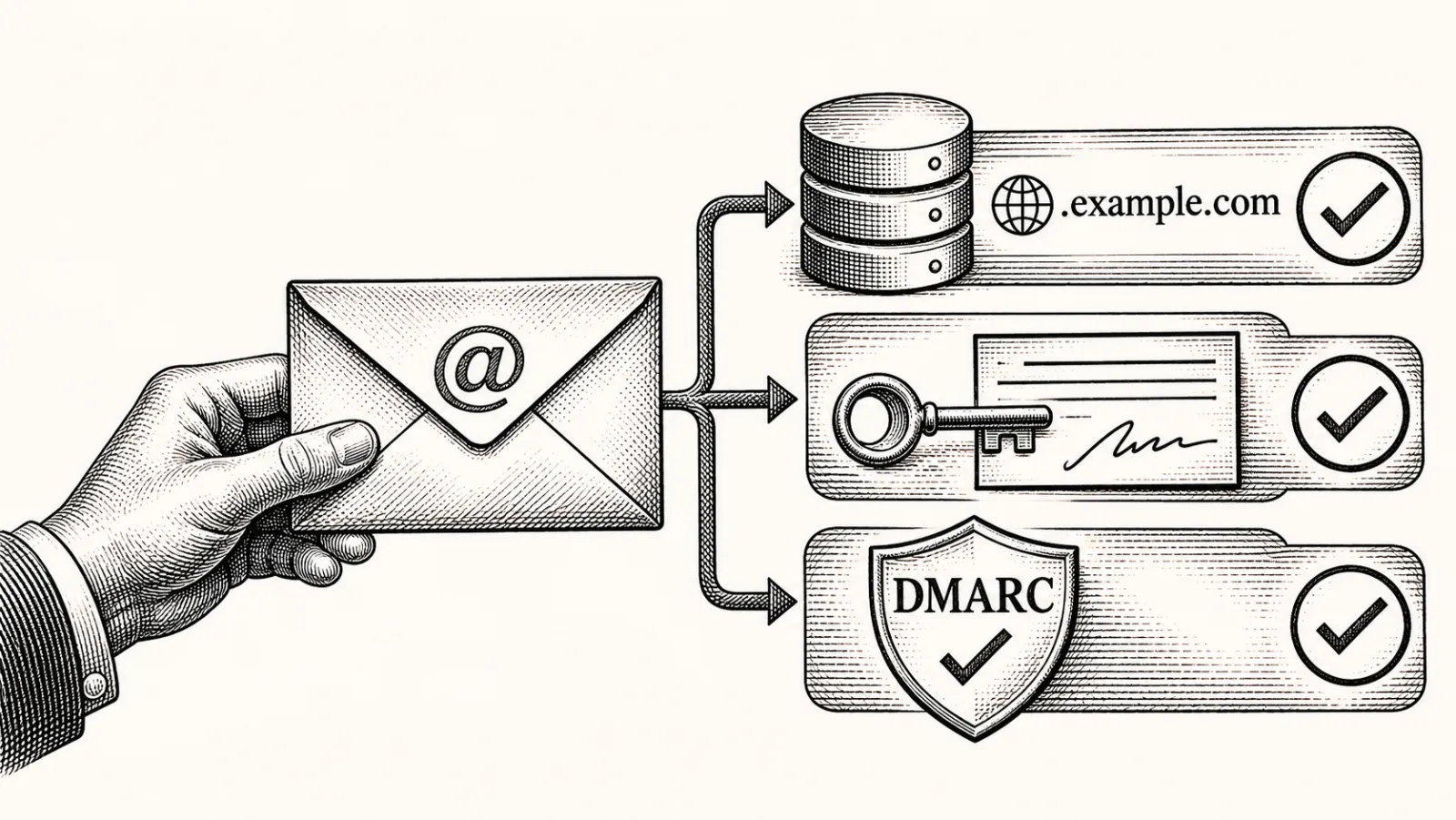
- SPF and DKIM alone cannot lock the visible From header shown to recipients; only DMARC enforces identifier alignment between the display domain, transport path, and cryptographic signature.
- Before enforcing rejection, engineering teams must inventory every third-party sender acting on the domain's behalf (CRM, invoicing, transactional APIs) and keep SPF within the 10-DNS-lookup ceiling.
- A safe rollout runs in three measured stages: collecting daily RUA aggregate reports under p=none, validating pass rates with progressive pct values under p=quarantine, and locking down with p=reject.
One of the fastest paths to financial loss in an organization occurs when an attacker impersonates an official address (billing@company.example or ceo@company.example) to send fake invoices or bank-account change requests to partners and finance teams. Base SMTP does not verify sender ownership, allowing any mail server to place your domain in the visible From header unless strict DNS authentication is active.
To stop exact-domain spoofing, engineering teams must coordinate SPF, DKIM, and per IETF RFC 7489 and audit all third-party senders before activating hard rejection.