Many organizations still mount their administration panel under /admin on the public marketing domain, or rely on a static VPN that trusts every packet inside the tunnel. When an employee password leaks, a browser extension steals a session cookie, or a frontend dependency triggers XSS on the main site, attackers gain a direct path into customer records, billing settings, and production databases.
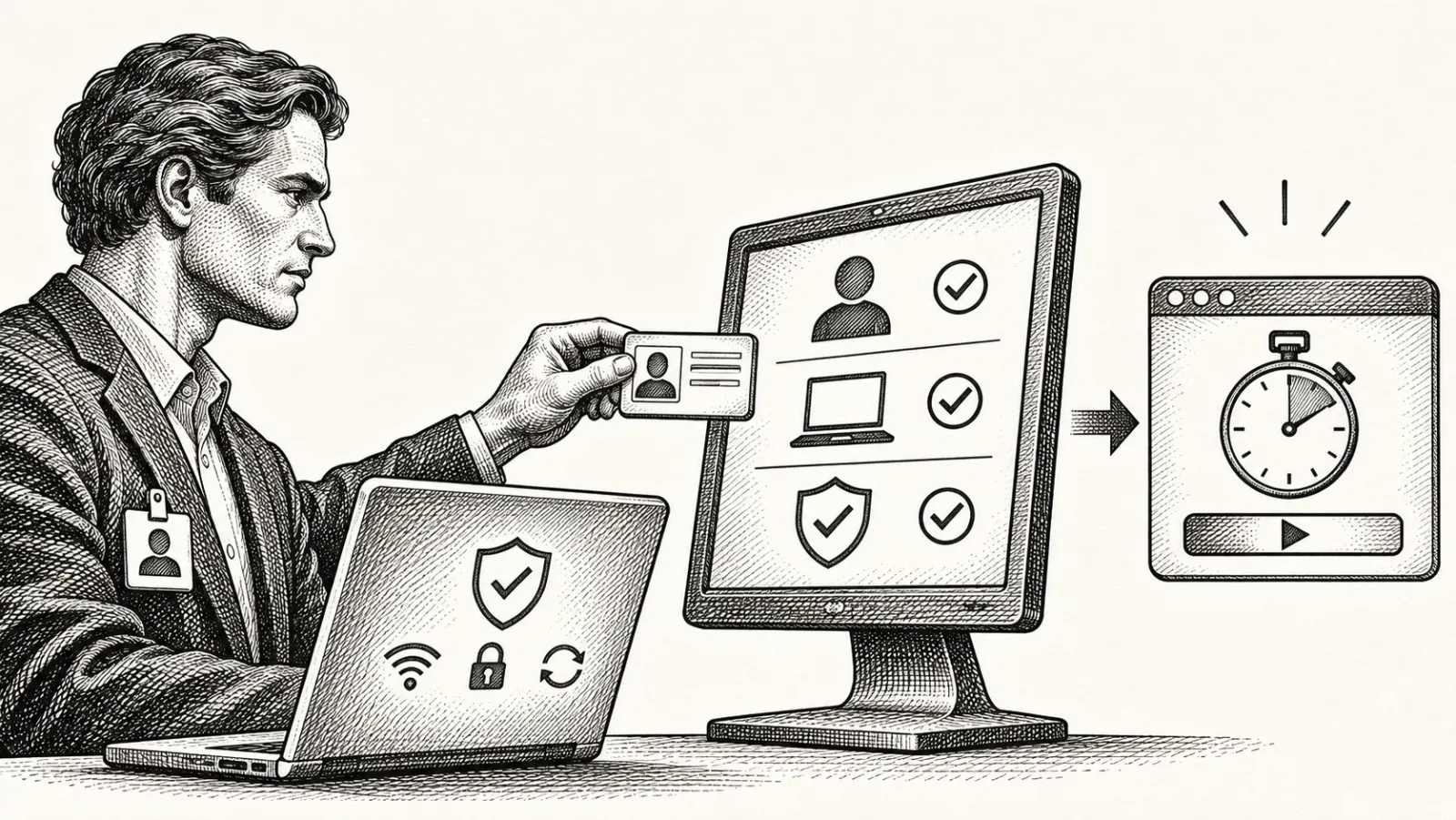
Zero Trust removes implicit trust based on network location: no request is safe simply because it originates from an office IP. Every access attempt against an internal portal must clear a chain of origin isolation, identity-aware edge checks, least-privilege roles, and short-lived sessions.
1. Isolating admin subdomains and origin boundaries
Hosting an internal console at example.com/admin forces operational tools to share an origin with public pages or customer portals. Under the Same-Origin Policy, any JavaScript executing on example.com - from chat widgets to analytics scripts - can call /admin endpoints with the browser's attached cookies.
Moving the console to a dedicated subdomain such as admin.example.com restores clean security boundaries:
- Bind cookies strictly to the host: Use the
__Host- prefix with Secure, HttpOnly, SameSite=Strict, Path=/, and no Domain attribute. Admin cookies cannot leak to the main site or be overwritten by sibling subdomains. - Separate browser and WAF rules: Enforce a tighter Content Security Policy (CSP) than the public site, set
frame-ancestors 'none' against clickjacking, add X-Robots-Tag: noindex, nofollow, and prohibit permissive CORS rules (Access-Control-Allow-Origin: *). - Close public inbound origin ports: Rather than exposing port 443 in public DNS, connect the origin through an outbound-only tunnel (such as Cloudflare Tunnel) or restrict firewall rules to edge proxy IPs.
2. Identity-aware edge access policies and multi-layer authentication
Per Cloudflare One's Zero Trust documentation, placing an Identity-Aware Proxy (IAP) at the network edge forces operators to verify identity before traffic reaches the application server. Credential-stuffing bots and vulnerability scanners terminate at the edge instead of hitting origin compute.
An edge policy for an admin portal should combine three signals:
- 01Centralized IdP SSO: Connect the edge gate to Google Workspace, Microsoft Entra ID, or Okta so offboarding disables access to every internal portal immediately.
- 02Phishing-resistant MFA: Require FIDO2/WebAuthn hardware keys or passkeys instead of SMS OTP or six-digit codes that adversary-in-the-middle proxies can relay.
- 03Device posture and machine identity: Enforce device posture checks or mTLS client certificates for infrastructure consoles, and issue separate scoped service tokens for CI/CD automation.
At the origin, the backend must never blindly trust spoofable headers such as X-Forwarded-Email. Instead, the server must verify the signed JWT injected by the edge proxy (for example Cf-Access-Jwt-Assertion) against the provider's JWKS keys, validate iss, aud, and exp, and reject any request without a valid signature.
3. Least-privilege roles, short session lifetimes, and privileged audit logging
Edge authentication guards the front door, while in-app controls determine the blast radius if an operator's logged-in laptop is compromised.
| Dimension | Legacy setup (shared /admin or static VPN) | Zero Trust admin architecture |
|---|
| Network boundary | Shared public origin or broad VPN subnet | Dedicated subdomain, zero public inbound ports |
| Pre-app verification | Origin login form only | Blocked at edge via IdP SSO and FIDO2/WebAuthn |
| Session lifetime | Multi-day tokens | 15-30 min idle timeout, 4-8 hour absolute cap |
| Authorization model | Broad superadmin accounts | Domain-scoped RBAC with default-deny |
| Audit trail | Basic HTTP logs lacking context | Append-only logs with actor, target, and diff |
Following the OWASP Session Management Cheat Sheet, admin portals should enforce two complementary timeouts:
- Idle timeout: Expire sessions after 15-30 minutes of inactivity to reduce exposure from unlocked workstations.
- Absolute maximum lifetime: Force full re-authentication every 4-8 hours regardless of activity, capping the lifespan of any stolen token.
- Step-up authentication: Require fresh MFA verification immediately before sensitive mutations such as changing roles, exporting PII, issuing API keys, or editing payout settings.
Roles must follow strict least privilege: separate customer support read access, finance reconciliation, and infrastructure administration instead of granting superadmin by default. Every sensitive PII read and state mutation should write to an append-only audit store isolated from the primary database, recording actor ID, active role, source IP, edge trace ID, target resource, redacted before/after diff, and UTC timestamp. Engineering teams frequently bundle subdomain isolation, outbound tunnels, and edge policies within broader Cloud & DevOps services to keep staging and production consistent.
4. Scope, technical caveats, and operational limits
This guide synthesizes public standards from Cloudflare One Zero Trust docs and the OWASP Session Management Cheat Sheet alongside ToanKhonTech's architecture practice; ToanKhonTech does not claim to have discovered any third-party vendor vulnerability.
Teams rolling out this model should plan for three operational caveats:
- Edge gates do not replace backend authorization: The edge confirms organizational identity, not record ownership. Every backend handler must independently enforce RBAC and object-level checks before querying data.
- Break-glass emergency access: An IdP or edge outage can lock responders out during an incident. Maintain an isolated break-glass path protected by offline hardware keys that triggers immediate alerts whenever invoked.
- Calibrate friction to risk: Requiring step-up MFA for routine read-only views pushes operators toward workarounds; tune timeouts and re-authentication prompts to action sensitivity.