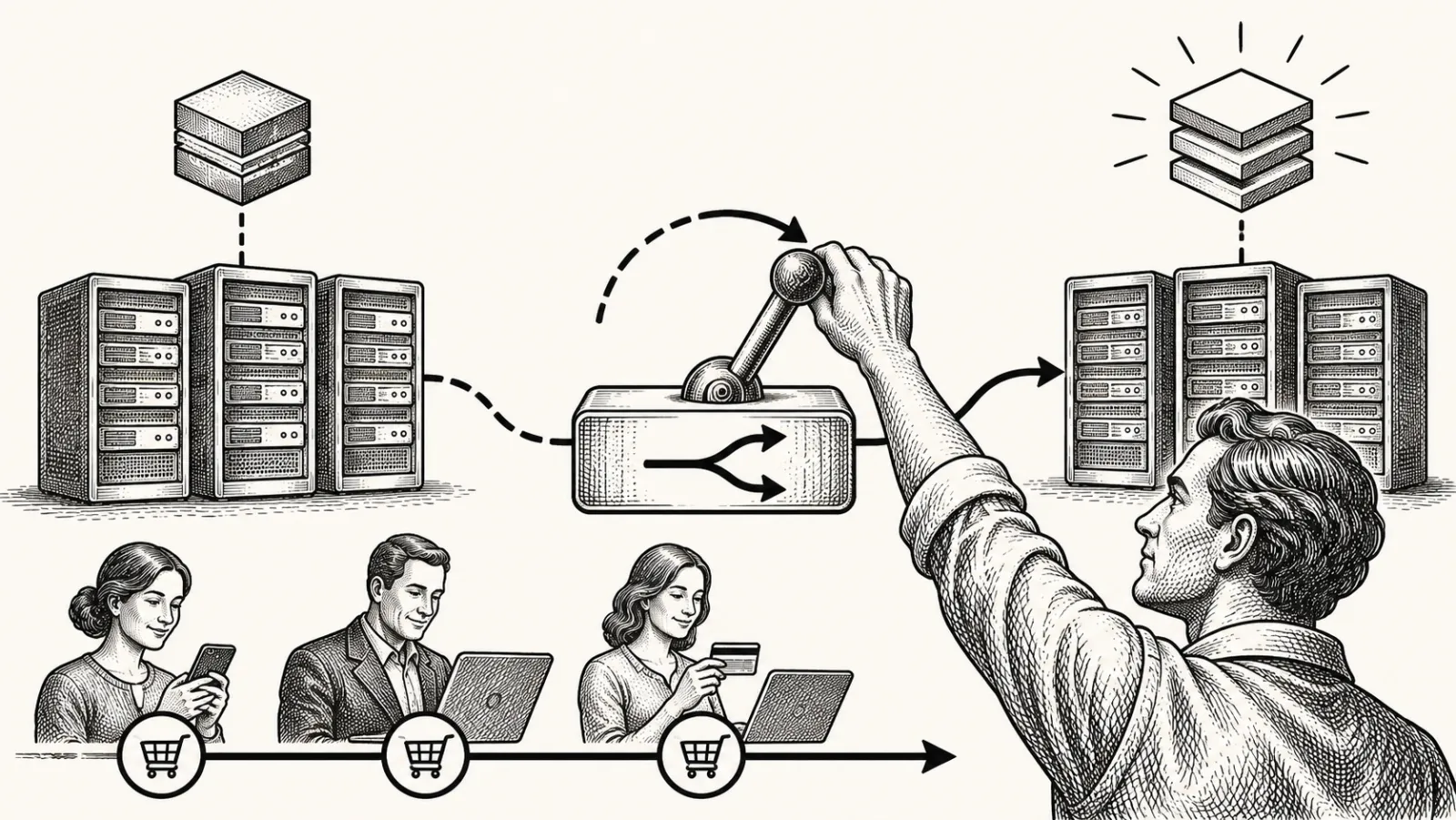
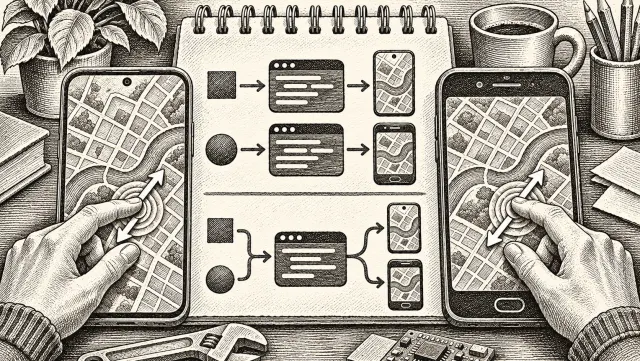
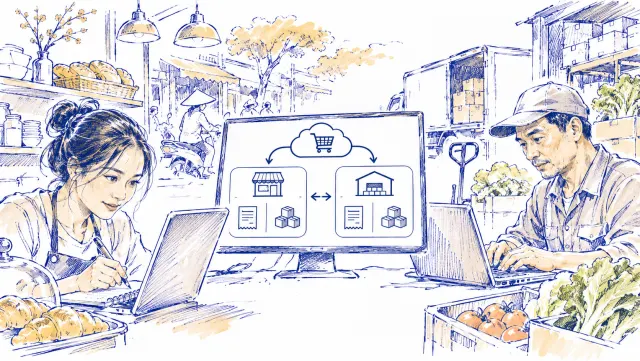
Many engineering teams still ship websites and APIs by bundling artifacts manually on a laptop, uploading over SSH, or scheduling late-night server restarts. That workflow introduces three recurring hazards: active user sessions drop mid-transaction, staging drifts from production configuration, and when a faulty build reaches users, engineers lose minutes rebuilding an older commit under pressure. Eliminating downtime requires a closed-loop CI/CD pipeline connecting every Pull Request to automated verification and deterministic recovery.
Automated Quality Gates and Isolated Branch Previews
The first rule of zero-downtime delivery is that type mismatches, lint violations, and broken routes must fail before reaching main. According to official GitHub Actions documentation, every pull_request event can trigger an isolated runner workflow inside a clean, reproducible environment independent of developer machines.
A reliable CI gate for web apps and APIs splits checks into four stages:
- Static verification (`typecheck` and `lint`): Running
tsc --noEmit alongside strict lint rules catches broken API contracts, missing environment bindings, and unsafe async patterns before any runtime executes. - Layered automated testing: Combining fast unit tests for pure business logic with integration tests for API endpoints, auth guards, and input validators prevents silent contract regressions.
- Production build validation: Compiling the exact production bundle in CI confirms no build step relies on local dev packages or uncommitted files.
- Per-branch preview builds: Publishing an ephemeral preview URL per Pull Request, backed by isolated environment variables and staging bindings, lets product and QA inspect flows, mobile layouts, and SEO metadata before merging.
Backward-Compatible Database Migrations with Expand-and-Contract
Most release-day outages are caused not by application code alone, but by destructive database schema changes that break backward compatibility. If a deployment immediately drops or renames a column still queried by the previous application version (N-1), requests routed to older runtime instances during cutover will fail with HTTP 500 errors.
To keep websites and APIs continuously available across schema transitions, teams should apply the Expand-and-Contract pattern across three separate deployments:
- 01Expand phase: Add new tables or nullable columns (or columns with safe defaults) while leaving existing structures untouched. Deploy application code that writes to both old and new columns (dual-write) while reading safely from the legacy column if new fields are not yet populated.
- 02Backfill and read cutover: Run small, non-blocking background batches to backfill historical records without locking hot tables. Once verified, release an update that shifts read queries to the new schema and monitor error rates closely.
- 03Contract phase: Only after all
N-1 instances have drained and the safe rollback window has elapsed should engineers execute a follow-up migration removing obsolete columns or legacy constraints.
| Engineering Dimension | Manual Release Workflow | Zero-Downtime CI/CD Pipeline |
|---|
| Defect detection point | After customers report production errors | At Pull Request via CI gates and preview URLs |
| Code transition model | Stop old process, copy files, restart server | Atomic traffic switch between immutable versions |
| Schema change safety | Direct table edits prone to locks and 500s | Expand-and-contract with N-1 compatibility |
| Incident recovery time | Manual rebuild or file restoration under stress | Single-command rollback to previous version ID |
| Environment consistency | Depends on per-server manual configuration | Declarative workflow files and infrastructure config |
Atomic Deploys on Cloudflare Workers and Verified Rollbacks
Once a Pull Request passes all checks and merges into main, the continuous deployment (CD) stage promotes the verified artifact to production. According to official Cloudflare Workers documentation, each publish operation creates an immutable version across the global edge network. Traffic switches atomically at the platform layer, meaning incoming requests execute completely against either the prior version or the newly promoted version rather than hitting half-uploaded files.
Even with atomic cutovers, subtle logic defects can slip past automated test suites under real production payloads. To contain blast radius and shorten Mean Time to Recovery (MTTR), production pipelines should enforce a five-step release and rollback verification routine:
- 01Separate version upload from traffic promotion: Upload the new Worker version first, verify its version-specific preview URL, and then promote 100% of traffic or ramp gradually using staged percentages.
- 02Post-deploy smoke checks: Immediately after cutover, trigger a GitHub Actions verification job against critical routes (
/api/health, key landing pages, and core API endpoints) to confirm HTTP 200 responses and expected JSON shapes. - 03Content-hashed static assets: Serve JavaScript, CSS, and media bundles under immutable content-hashed filenames in object storage with long cache headers so browsers holding HTML from the previous release never encounter missing chunk errors during transition.
- 04One-step rollback execution: If 5xx error rates climb or smoke checks fail, roll traffic back immediately to the last known healthy version ID rather than rushing a hotfix through a full build cycle.
- 05Post-rollback verification: Inspect live logs, latency metrics, and recent write payloads to verify that data written during the brief cutover window remains valid under the restored
N-1 code.
Across real-world systems delivered through ToanKhonTech's cloud and DevOps services, combining strict Pull Request checks, disciplined schema evolution, and rehearsed rollback drills allows engineering teams to ship multiple releases per day without disrupting active users.
Scope, Caveats, and Engineering Limitations
This guide synthesizes documented capabilities from official GitHub Actions and Cloudflare Workers reference materials alongside ToanKhonTech's operational engineering practice; it does not cite synthetic benchmark figures from dedicated hardware clusters. Instant application-layer rollbacks safely revert stateless compute logic only when underlying database changes remain backward-compatible; if a destructive migration has already dropped columns or altered data irreversibly, rolling back a Worker version cannot restore lost fields. Teams should routinely rehearse rollback procedures in staging and restrict destructive contract migrations behind explicit review gates to preserve long-term operational safety.