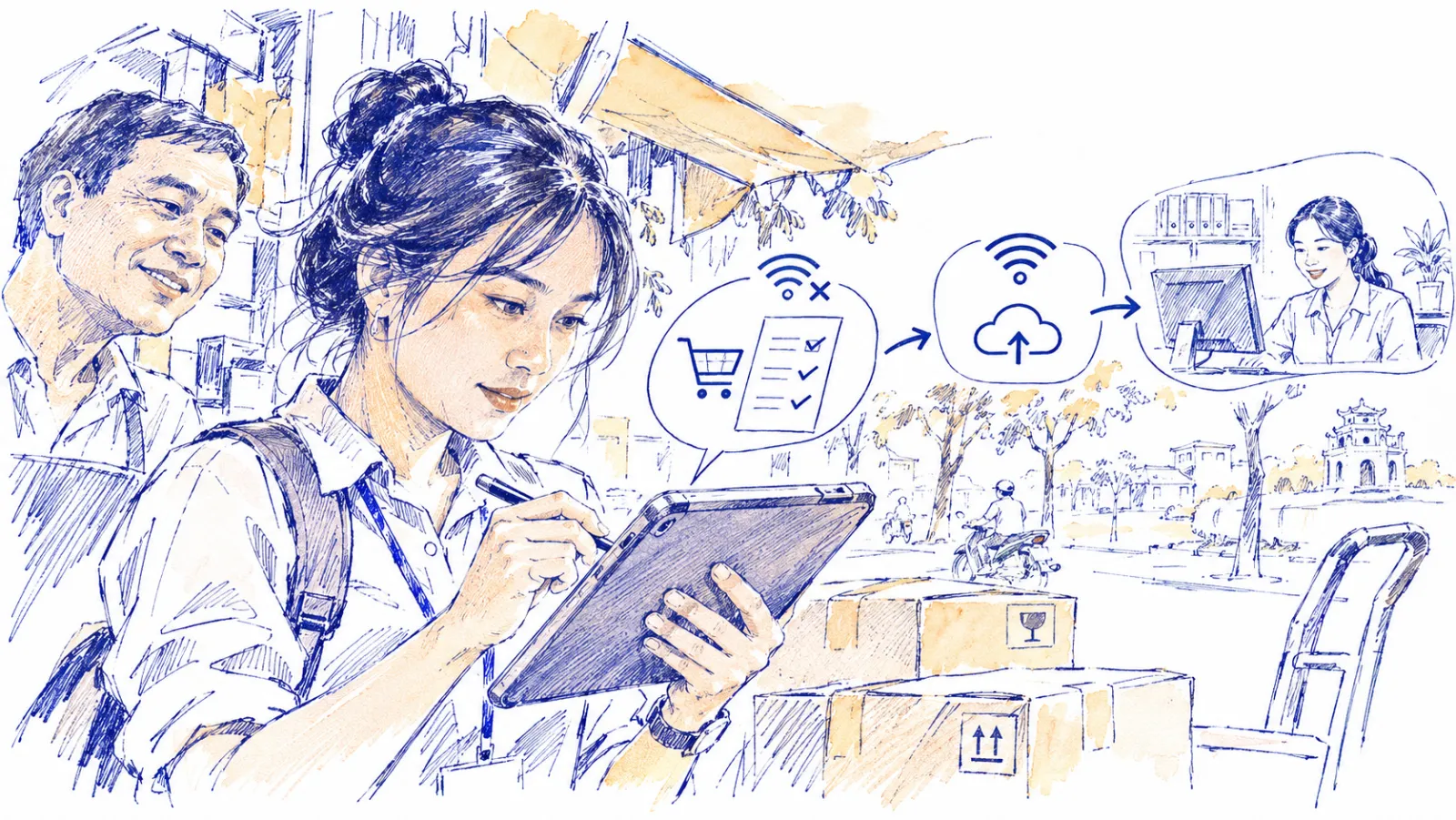
Field sales representatives, delivery drivers, and warehouse operators rarely work inside predictable Wi-Fi or 5G coverage. Steel-framed cold storage rooms, underground parking bays, rural delivery routes, and crowded retail basements frequently drop packets or trap mobile devices in "lie-fi" states where signal bars appear full while requests hang for 30 seconds. When a mobile app fires a blocking API call every time a worker taps Save or scans a barcode, spinners freeze the screen, unsaved form inputs vanish, and staff fall back to paper clipboards. An offline-first architecture solves this root failure by shifting persistence and state coordination directly onto the device.
The core principle outlined in the Android Developers offline-first architecture guide is treating on-device persistence as the single source of truth for the presentation layer. Product catalogs, customer credit snapshots, and route manifests always render directly from local storage rather than waiting for remote JSON payloads.
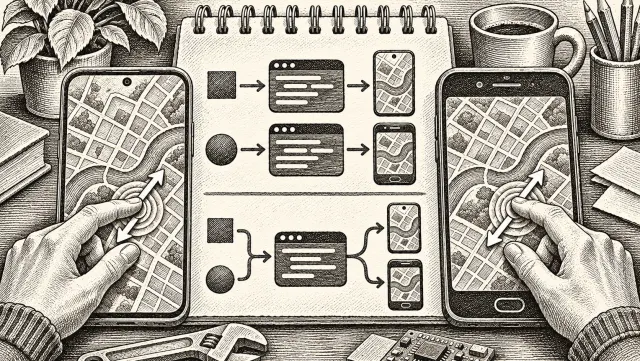
On Android, Room wraps SQLite with observable reactive streams (Flow), automatically pushing UI updates whenever local tables change. On iOS, Apple Developer documentation for SwiftData provides @Model schema definitions tied directly into SwiftUI model contexts, allowing fast local reads and writes with sub-millisecond responsiveness.
When connectivity returns, the repository layer runs background refresh jobs to fetch deltas from the backend (via updated_at watermarks or pagination cursors) and merges them into Room or SwiftData. By cleanly separating UI reads from remote refresh pipelines, screens stay responsive even when connectivity drops mid-workflow.
Durable Outbox Queues and Idempotent Retries
Offline reads only solve half of field reliability; reliable writes (order submission, proof-of-delivery capture, stock counts) require much stricter guarantees. Retrying failed HTTP POST calls purely in memory fails the moment a user swipes the app closed or the OS reclaims a background process.
Every local mutation should be written into a persistent Outbound Mutation Queue (Outbox table) inside the exact same database transaction as the business record itself. Each outbox entry needs at least a client-generated mutation_id (UUIDv4), an operation type (CREATE_ORDER, CONFIRM_POD), a serialized payload snapshot, a lifecycle state (PENDING, IN_FLIGHT, FAILED_PERMANENT), retry_count, and next_retry_at.
To prevent duplicate orders or double stock deductions when a connection drops right after the server commits a request but before the mobile client receives the response, backend endpoints must enforce idempotency:
- 01The mobile client attaches an
Idempotency-Key header (using mutation_id) to every outbox request. - 02The server records processed keys alongside a request payload hash and cached response (for instance via Redis or a unique database constraint) for a safe retention window such as 24 to 72 hours.
- 03If the same key arrives again, the server skips business execution and replays the original response.
- 04The client removes or closes the outbox item only on HTTP
2xx, applies exponential backoff with jitter on 5xx or transport timeouts, and immediately halts automatic retries on 4xx business rejections such as invalid pricing or insufficient stock.
Teams planning field mobility platforms can explore our mobile app development services to align local mobile persistence with idempotent backend API contracts from day one.
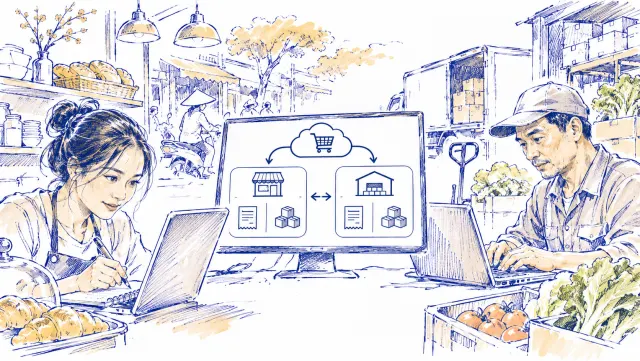
Applying a blanket Last-Write-Wins (LWW) rule across all tables is one of the fastest ways to corrupt operational data. If two sales reps book the final units of an SKU while offline, or a warehouse clerk adjusts bin quantities while a dispatcher edits the same ticket on the web portal, trusting whichever device clock looks newer introduces silent data loss (especially when handheld device clocks drift).
| Field Data Category | Conflict Policy | Implementation Mechanism | Operational Risk to Manage |
|---|
| Barcode scans, delivery photos, GPS pings | Append-only event stream | Client UUID + server received_at timestamp | Out-of-order arrivals require separating captured_at from received_at |
| Customer notes, visit tags | Field-level Last-Write-Wins | Per-field timestamps or ETag checks | Silent overwrites remain possible if two users edit the identical field |
| Available stock, customer credit limits | Server-authoritative rules | Optimistic locking (version / ETag) or delta events | Needs clear escalation UX if an offline order exceeds live stock |
| Multi-device draft orders | Merge or user-assisted resolution | Flag record as CONFLICT and preserve both versions | UI must show exact field differences for manual selection |
A critical safeguard is never overwriting numeric balances with absolute values from a phone (for example sending stock = 8). Always transmit delta events (deduct = 2) paired with an expected version token. If remaining inventory falls short upon arrival, the server marks the order for supervisor review instead of silently breaking ledger accuracy.
Honest Network-State UI Cues and Storage Hygiene
Well-designed offline-first apps never pretend a connection exists, yet they also avoid interrupting workers with blocking alert dialogs every few seconds. Interfaces should surface three clear signals:
- Global connectivity status: A slim, non-blocking banner indicating "Offline - changes saved on device" or "Uploading 4 pending updates", alongside the timestamp of the last successful catalog refresh.
- Per-record status indicators: Compact badges on each order or inspection card distinguishing "Saved on device" (queued), "Uploading", and "Needs review" (rejected by server validation or conflict).
- Manual flush trigger: An explicit "Retry pending items" action so workers stepping out of an elevator or loading dock can trigger immediate queue processing without guessing when OS schedulers (
WorkManager on Android or BGTaskScheduler on iOS) will wake up.
Engineering teams should also enforce local retention policies (such as purging uploaded proof-of-delivery photos after 14 days) and encrypt local SQLite stores whenever devices carry sensitive customer pricing or account lists.
Scope, Caveats, and Practical Limitations
Architectural patterns covering Android Room, unidirectional local data flows, and iOS SwiftData persistence reflect official guidance from Android Developers and Apple Developer. The outbox state machine, Idempotency-Key protocol, conflict matrix, and UI cue recommendations represent ToanKhonTech's field engineering practice.
Offline-first design does not eliminate server-side validation, nor does it turn every workflow into real-time reservation. For strict second-by-second inventory locking (such as flash allocations) or immediate credit authorization, organizations must still require a final online confirmation step or pre-allocate per-rep stock quotas before routes depart.