Bringing AI agents into live operations: guardrails, evals and automation boundaries
Most AI agents stall after early trials because they lack deterministic guardrails, human approval gates and repeatable evaluations before every prompt or model change.
Start with structured workflows before granting autonomous loops; reserve open-ended agent loops for tasks whose step count genuinely cannot be predicted upfront.
Every action touching customers, money or production records needs schema validation, idempotency keys and an explicit human approval gate.
Building automated evals from real operational traces catches regressions before shipping prompt edits or switching to smaller, cheaper models.
Many AI agent pilots look impressive in a curated walkthrough yet stumble as soon as they touch real orders, invoices or customer support queues. Failure rarely happens because the language model lacks intelligence; it usually happens because teams treat a probabilistic agent like deterministic software, skipping runtime guardrails, observability and structured testing.
Making an AI agent genuinely useful in daily operations without introducing silent risk comes down to three engineering habits: choosing the simplest control structure, placing hard boundaries around side effects and running repeatable evaluations (evals).
Workflows versus autonomous agents
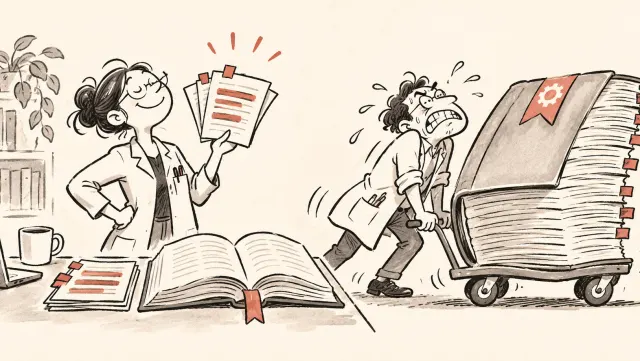
In Anthropic's engineering guide Building effective agents, the most useful early distinction is between workflows (application code orchestrating model calls and tools through predefined paths) and agents (models dynamically choosing their next tool, reading feedback and deciding when a task is done).
Company blog
Read next
In ToanKhonTech's delivery experience, roughly 80% of business automation tasks such as support triage, PDF invoice extraction or meeting note structuring only require a structured workflow (intent routing or a fixed 2-to-3 step chain). Workflows offer predictable cost, straightforward debugging and zero runaway loops. Reserve autonomous agents for genuinely open-ended work such as investigating bugs across unfamiliar codebases or synthesizing evidence across unpredictable records.
Four guardrails required before touching production data
Once a model can call internal APIs, a small misunderstanding early in a chain can compound across steps. Four engineering controls keep failures contained at the software boundary:
1. Enforce structured outputs and deterministic validation
Never parse free-form prose to drive downstream state changes. Every intermediate payload (SKU codes, monetary totals, order states, priority flags) should conform to a strict JSON schema and pass code-level validation (such as Zod or TypeScript checks). If an amount is negative, a customer ID does not exist in the database or confidence is low, route the item to a human review queue instead of letting the loop improvise.
2. Human-in-the-loop checkpoints for irreversible actions
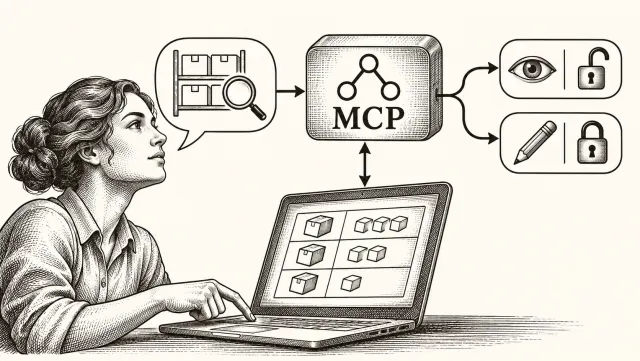
OpenAI's practical guide to building agents recommends tiering permissions by action impact. An agent can freely read records, draft replies or prepare stock transfer proposals; however, approving payments, modifying ledger balances, deleting rows or sending external customer notices should pause at a one-click human approval checkpoint.
3. Idempotency keys and hard loop budgets
On real networks, an API call can time out after succeeding on the server, prompting an agent to retry. Every write tool must require an idempotency key so retries never create duplicate orders or double charges. Alongside that, the orchestrator should enforce strict ceilings on maximum loop steps (for example, 6 turns), wall-clock runtime and token spend per session.
4. Full step-by-step execution traces
Unlike standard web apps where an HTTP error log often suffices, agent systems require complete execution traces: user input, retrieved context, chosen tool, exact arguments, tool output and final response. Without traces, engineers cannot diagnose why an agent made a bad call at 2 a.m.
Replace gut-feel testing with automated evals
A classic post-launch trap is editing one sentence in a system prompt to fix a single edge case, only to quietly break ten flows that worked yesterday. OpenAI's evaluation documentation recommends turning real production traces into structured test datasets that run automatically on every change.
A lean eval pipeline for a growing team takes three practical steps:
01Curate 30 to 60 real operational cases: Include routine tasks, incomplete inputs, conflicting fields and edge cases where the agent should refuse or escalate.
02Combine code graders and model graders: Use code-based assertions for objective rules (valid JSON schema, right tool selected, exact IDs preserved, zero sensitive data leaks) and pair LLM-as-a-judge with periodic human review for semantic quality and tone.
03Establish a baseline on a strong model before cutting cost: Run your eval suite with a flagship model first to measure the accuracy ceiling, then test smaller, faster models on narrower sub-steps (such as classification or formatting). Keep the swap only when pass rates hold steady while latency and token cost drop.
Automation boundaries and honest limits
AI agents deliver their strongest return when they gather evidence, run first-pass checks and stage ready-to-approve actions so staff decide faster. Conversely, avoid handing full autonomy to an agent in strictly regulated steps, workflows with messy unverified inputs or actions whose errors are expensive to unwind. The practices outlined here combine public engineering guidance from Anthropic and OpenAI with ToanKhonTech's software architecture experience; every organization still needs to measure accuracy and cost directly against its own operational dataset before widening autonomy.
References
Sources used to check this article. Any ToanKhonTech test results are identified separately in the text.