RAG or long context: choosing the right architecture for enterprise knowledge
With context windows spanning hundreds of thousands of tokens plus prompt caching, do companies still need RAG? A technical breakdown of cost, access control, accuracy and hybrid design.
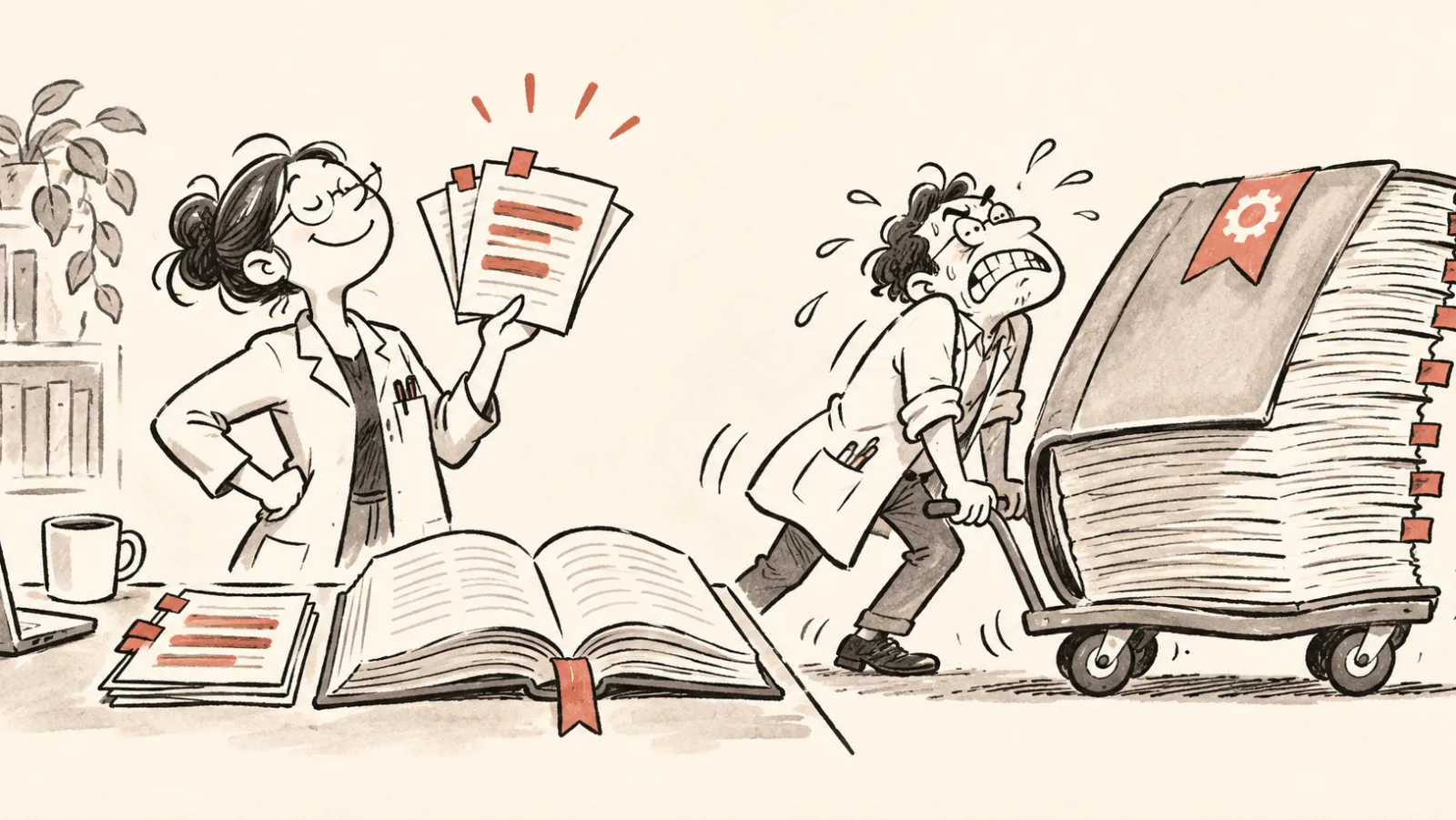
For stable document sets under roughly 200,000 tokens, loading files directly with prompt caching is often simpler and misses fewer cross-references than basic RAG.
Once corpora reach millions of tokens, update frequently or require strict department and tenant permissions, hybrid RAG with reranking remains essential.
Production systems increasingly combine both: static runbooks and schemas in prompt cache, paired with permission-filtered RAG tools for large, changing repositories.
Two years ago, the default engineering answer for letting an AI answer questions over company files was almost always Retrieval-Augmented Generation (RAG): slice documents into chunks, generate embeddings, store them in a vector database and retrieve a handful of snippets per query. Today, with language models accepting 200,000 to over 1 million tokens and offering prompt caching that sharply discounts repeated input prefixes, engineering leaders ask a fair question: can we skip RAG altogether and place the entire knowledge base in context?
The answer has less to do with which approach is newer and more to do with four concrete operational variables: corpus size, update frequency, access-control boundaries and the kinds of questions employees actually ask.
When long context with prompt caching wins clearly
According to Anthropic's technical guides on Prompt Caching and Contextual Retrieval, caching a static prompt prefix (such as system instructions, policy manuals or fixed reference files) substantially lowers repeated input token pricing and reduces time-to-first-token across follow-up calls. This approach fits three scenarios particularly well:
Company blog
Read next
Bounded corpora under roughly 200,000 tokens (a few hundred pages): Examples include a standard contract template set, a single plant's operations handbook or a focused software module. At this scale, building and maintaining chunking pipelines, vector indexes and rerankers often costs more engineering time than it saves.
Global synthesis and cross-checking across full documents: When legal counsel asks whether a payment clause in Appendix B contradicts a definition in Section 2, basic RAG often fails because it retrieves isolated passages. Long context lets the model inspect both sections in a single pass.
Slow-changing reference material: Prompt caching pays off when the cached prefix remains unchanged throughout its cache lifetime. If staff edit a line inside the cached corpus every few minutes, cache hit rates collapse and the system pays full input processing costs repeatedly.
Why RAG remains necessary for larger enterprise workloads
Even as context windows expand, ToanKhonTech's architectural analysis highlights four hard boundaries when pushing hundreds of thousands of tokens into every request:
1. Multi-tenant and department access control (RBAC)
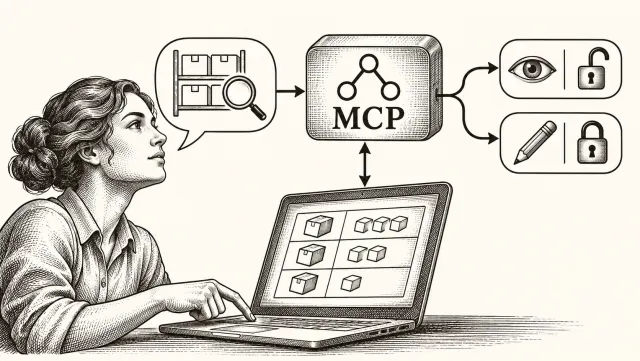
Inside a live DMS or ERP platform, HR staff can read payroll policies while external distributors can only see their own tier agreements. Putting mixed documents into one shared prompt cache violates data isolation. In a RAG pipeline, every indexed chunk carries permission metadata (tenant_id, role, department) and is filtered strictly at database query time before the model ever sees the text.
2. Compounding cost across high volume and multi-step agents
Prompt caching cuts per-token read costs heavily, yet it does not make large contexts free. When thousands of employees query the assistant daily, or an agent loops 8 to 10 times per ticket, sending 150,000 cached tokens on every step can still generate a much larger monthly bill than retrieving 4,000 to 8,000 targeted tokens via RAG.
3. Attention dilution from stale or near-duplicate files
Context engineering guidance emphasizes that model attention is finite. Packing twenty near-identical historical price sheets alongside the current revision increases the risk of citing an outdated figure. A RAG index can filter by effective date and document status so retired versions never enter the prompt.
4. Fixing weak RAG with Contextual Retrieval
Many disappointing early RAG deployments failed not because retrieval is flawed, but because naive chunking stripped away surrounding context (leaving a snippet such as "revenue rose 14% quarter-over-quarter" with no company name or period). In its Contextual Retrieval engineering report, Anthropic prepends a short document-aware context summary to each chunk, then combines semantic embeddings, exact-match BM25 search and reranking. On Anthropic's published benchmarks, combining Contextual Retrieval with reranking cut retrieval failure rates by up to 67%.
Decision matrix for engineering teams
Factor
Long Context + Prompt Caching
Hybrid RAG (BM25 + Vector + Rerank)
Knowledge base size
Bounded, typically under 200,000 tokens
Millions of tokens, growing continuously
Update cadence
Weekly or monthly revisions
Hourly or per-transaction updates
Access boundaries
Hard to isolate granular user permissions inside shared cache
Rising bill in multi-step loops, stale version clutter
Lost context from naive chunking if poorly engineered
The hybrid architecture used in production
Rather than treating the two as mutually exclusive, mature enterprise AI systems increasingly run a two-layer design:
01Static layer on Prompt Caching: Holds assistant rules, internal glossary definitions, tool schemas and core operating policies that rarely change.
02Dynamic layer exposed as a RAG search tool: Project files, support histories, contracts and product guides are indexed with effective dates and permission filters. The model invokes retrieval only when specific evidence is needed and cites the source document so staff can verify every claim.
Scope and caveats
The Contextual Retrieval accuracy gains and Prompt Caching discount figures cited above come from Anthropic's published engineering documentation. Real-world outcomes depend heavily on document cleanliness (scanned PDFs, dense tables, bilingual terminology), query concurrency and current model provider pricing. Before committing to heavy retrieval infrastructure, teams should benchmark 30 to 50 real internal questions across both architectures to measure answer accuracy and cost per query directly.
References
Sources used to check this article. Any ToanKhonTech test results are identified separately in the text.