As AI summaries such as Google AI Overviews, AI Mode, and LLM-powered answer engines appear at the top of search results, many teams search for "GEO" (Generative Engine Optimization) tactics to protect organic visibility. Alongside genuine interest, the market has filled with claims about secret tags or drop-in files that supposedly force AI models to cite a site. From a web engineering standpoint, preparing for AI search means delivering clean, crawlable HTML, accurate structured data, and understanding where conventions such as llms.txt actually fit.
In its official AI Features and Your Website documentation, Google Search Central states explicitly that there are no special optimization requirements, no AI-specific HTML attributes, and no dedicated structured data types required for AI Overviews or AI Mode. No hidden meta tag or proprietary manifest can compel Google's AI features to cite a page.
Instead, eligibility in AI-driven search results depends on the same core standards as traditional Google Search:
- Crawlability and indexability: Pages must return reliable HTTP 200 responses, stay accessible in
robots.txt, and avoid accidental noindex directives on key landing pages. - Readable HTML on first load: Primary copy, logical heading hierarchy (
h1, h2, h3), and comparison tables should appear directly in server-rendered or pre-rendered HTML. When critical explanations sit behind delayed client-side API calls or uncaptioned graphics, crawlers and summarization pipelines extract text less reliably. - Helpful original depth: Answer synthesis systems favor sources that provide clear definitions, concrete reasoning, and verifiable specifics rather than thin summaries.
Google's documentation also notes that Search Console currently groups clicks from AI Overviews and AI Mode inside standard Web performance reporting rather than providing a separate AI-only filter.
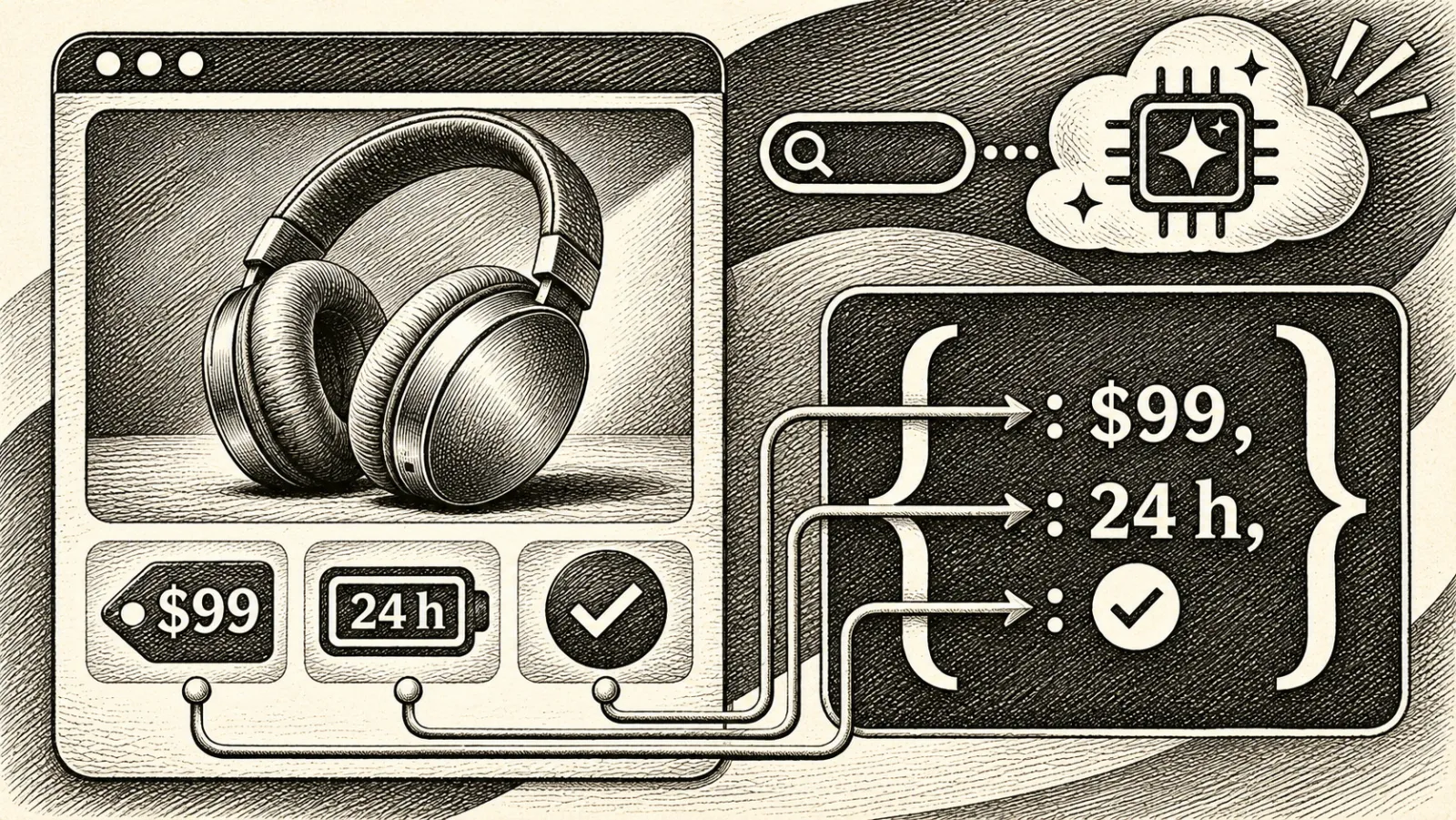
In its Introduction to structured data guide, Google recommends JSON-LD inside a <script type="application/ld+json"> block in <head> or <body>, rather than mixing Microdata or RDFa attributes into UI elements. Separating machine-readable semantics from HTML layout markup keeps nested objects maintainable and prevents accidental breakage during redesigns.
In search and knowledge graph pipelines, JSON-LD clarifies entities and relationships (Organization, Article, Product, BreadcrumbList) while unlocking Rich Results eligibility. Even so, developers must follow two strict constraints:
- 01JSON-LD supports comprehension but never overrides visible text: Search systems verify structured data against visible page content. Mismatched claims, hidden text, or deceptive schema violate Google guidelines and risk manual actions.
- 02Validate template changes continuously: Any update affecting schema output should be checked with Google's Rich Results Test and the Schema Markup Validator to catch syntax errors or missing required fields early.
How `llms.txt` Differs from `robots.txt`, `sitemap.xml`, and JSON-LD
Unlike Google Search standards, llms.txt is an open community proposal hosted at llmstxt.org, aimed at Large Language Models and AI coding assistants. Typical production web pages wrap core text inside navigation bars, footer links, tracking scripts, and layout containers that waste an LLM's context window.
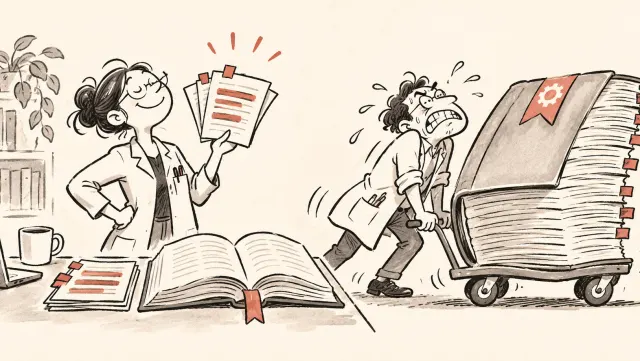
Per the llmstxt.org specification, a root /llms.txt file uses Markdown with a single # title, a short > summary blockquote, optional notes, and ## sections listing curated links with concise descriptions (plus an ## Optional section for secondary pages). Many documentation platforms also publish /llms-full.txt, concatenating core Markdown pages into one file so an AI tool ingests a reference set in a single HTTP request.
| Technical Dimension | robots.txt | sitemap.xml | JSON-LD Schema | llms.txt / llms-full.txt |
|---|
| Primary purpose | Controls crawler access rules | Lists indexable URLs | Defines entities and semantics | Curates clean Markdown for LLMs |
| Standard format | Plain text directives | Sitemap XML protocol | JSON-LD embedded in HTML | Root-level Markdown files |
| Google Search status | Enforced standard for Googlebot | Standard URL discovery input | Official recommendation for comprehension and Rich Results | Community convention with no confirmed ranking effect |
| Best suited for | Blocking admin or duplicate routes | Sites with hundreds to millions of URLs | Articles, products, organizations, guides | Developer docs, API references, technical guides |
When building search-resilient sites through ToanKhonTech web development services, an effective rollout follows five prioritized steps:
- 01Serve clean HTML from the server: Deliver headings, body copy, and internal links in the initial HTML payload with low Time to First Byte (TTFB).
- 02Audit crawl directives carefully: Keep
robots.txt and sitemap.xml accurate so essential scripts and canonical pages are never blocked unintentionally. - 03Structure prose for clear extraction: Align
h2 and h3 headings with real user questions, lead sections with direct answers, and format comparisons in standard tables. - 04Keep JSON-LD aligned with visible DOM: Implement
Organization, BreadcrumbList, Article, or Product schemas matching rendered page text. - 05Publish `llms.txt` selectively: Add
/llms.txt (and /llms-full.txt where helpful) for developer docs, API specs, or core service overviews.
Scope, Caveats, and Honest Limitations
The guidance on AI Overviews and JSON-LD above reflects published Google Search Central documentation, while the llms.txt pattern follows the specification at llmstxt.org. From ToanKhonTech's engineering assessment, publishing llms.txt does not boost Google Search rankings and is not a prerequisite for appearing in AI Overviews.
For large e-commerce catalogs with tens of thousands of SKUs and shifting prices, compiling an entire inventory into llms-full.txt is counterproductive: the payload grows too large, drifts out of date, and exceeds model context limits. Conversely, for software documentation portals, B2B knowledge bases, and technical specs, llms.txt helps engineers and AI assistants query docs directly. Investing first in crawlable server-rendered HTML, fast response times, and accurate structured data remains the most durable foundation for both classic SEO and AI search.