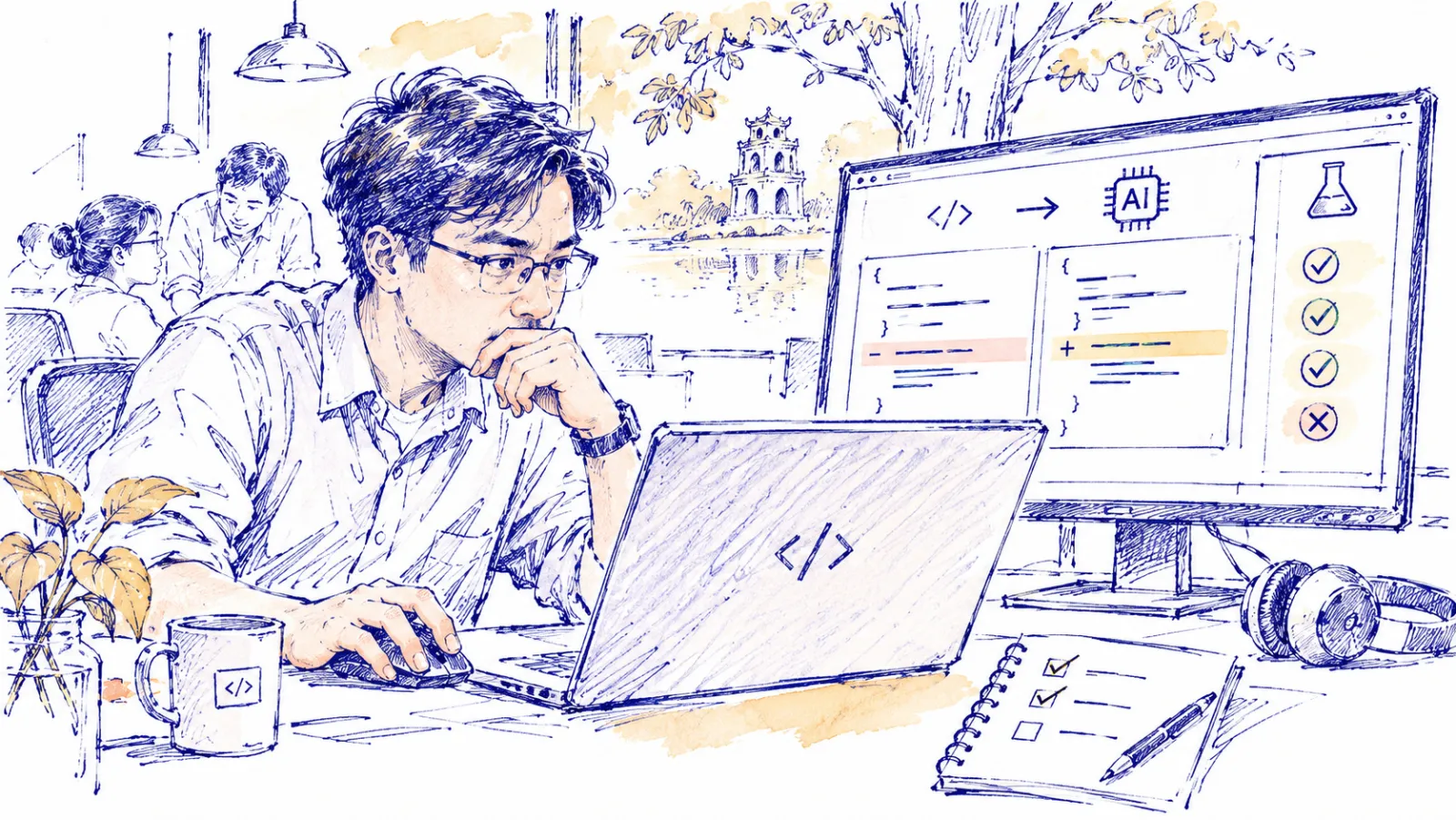
When software teams introduce AI coding assistants into editors or automated pull-request workflows, raw line output rises sharply during the first few weeks. Yet many engineering leads soon encounter a paradox: more code is written each day, while reliable feature delivery slows down. Pull Request (PR) queues fill with sprawling multi-file diffs, reviewers hit fatigue, and subtle regressions or duplicated utilities quietly accumulate as technical debt.
The root cause is rarely whether an AI model writes syntax fast enough. The bottleneck shifts from typing code to verifying architectural intent and integration safety. To gain real delivery speed without eroding codebase maintainability, teams need explicit engineering guardrails in daily workflows, supported where needed by structured IT consulting before rolling AI tooling out across every repository.
Keep PR scopes small and retain human ownership of architecture
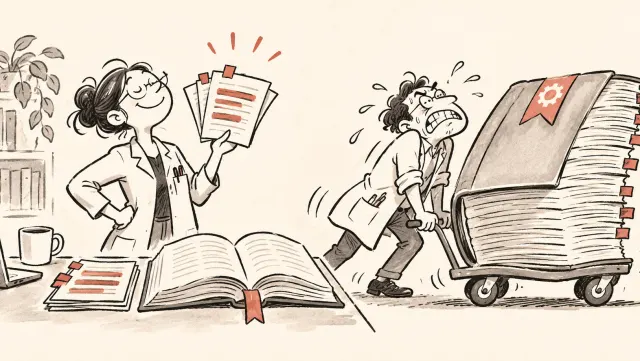
AI assistants tend to solve prompts locally by generating new files or cloning helper functions rather than reusing shared domain modules. When engineers merge large AI-generated diffs in a single batch, reviewers lose visibility into cross-layer side effects across database queries, state management, and public APIs.
In "Building effective agents", Anthropic Engineering highlights the value of simple, composable workflows with clear verification boundaries and human checkpoints rather than handing open-ended multi-step edits to an unguarded autonomous loop. Translated into daily software engineering, teams should keep architectural control firmly in human hands through four concrete rules:
- Cap each Pull Request to a single responsibility, ideally under 300 to 400 net changed lines, so reviewers can trace every conditional branch carefully.
- Separate structural refactoring PRs from feature PRs so file moves and renames never obscure behavioral logic changes.
- Require a brief human-written design note before prompting AI across multiple modules, specifying data contracts and existing shared utilities that must be reused.
- Hold the PR author accountable for explaining every submitted line; if the engineer cannot explain why an AI-generated block behaves safely on edge cases, the PR is not ready for review.
Senior engineers should not spend code review cycles catching missing null checks, mismatched types, or broken imports produced by an autocomplete session. Your Continuous Integration (CI) pipeline must act as the first strict filter so only verified changes reach human reviewers.
| Operational dimension | Ad-hoc AI coding without guardrails | Gated engineering practice |
|---|
| Pull Request scope | Large diffs mixing features and cleanup | Small, single-purpose changes |
| Typecheck and lint rules | Bypassed or warnings ignored to merge fast | Strict typecheck and linter checks mandatory |
| Test integrity policy | Tests weakened or edge cases skipped | Full unit and E2E gates; relaxing assertions banned |
| Security scanning | Model snippets trusted at face value | SAST, secret detection, and dependency CVE audits |
| Human review focus | Hunting syntax, null checks, and formatting | Evaluating architecture, domain boundaries, and clarity |
| Primary success metric | Counting lines of code generated per day | Tracking post-merge defect rates and PR rework ratio |
At the browser and user-flow layer, Playwright's official documentation details cross-browser end-to-end execution across Chromium, WebKit, and Firefox using auto-waiting assertions and isolated browser contexts for every test case. Those isolation and auto-waiting guarantees help teams catch subtle UI state regressions and background API breakages introduced by AI edits that unit tests alone frequently miss.
Alongside functional tests, automated security gates including SAST rules, secret scanning, and dependency vulnerability audits should run on every commit. Language models occasionally suggest outdated library APIs or unsafe string concatenation in queries and templates that easily slip past a quick visual scan on a busy afternoon.
Measure defect rates and maintenance cost instead of lines of code
Evaluating AI tooling by counting generated lines of code or prompt acceptance rates creates perverse incentives: developers accept verbose boilerplate that raises reading and maintenance costs for everyone else. Engineering leaders should instead anchor team governance on five measurable practices:
- 01Track post-merge escaped defect rates, hotfix frequency, and rollback rates per release cycle rather than raw commit volume.
- 02Monitor PR rework ratio (how often a PR bounces back after review or fails CI repeatedly) to spot where AI drafts are bypassing local verification.
- 03Prohibit deleting or loosening existing test assertions just to turn a failing build green; any change to test expectations must carry an explicit business justification.
- 04Require searching existing repository helpers before accepting newly generated utility functions, preventing silent code duplication.
- 05Schedule periodic architecture cleanup reviews per sprint to remove dead code, consolidate repeated logic, and refine shared team prompting rules.
Scope, practical caveats, and reference boundaries
In this guide, principles around bounded verification loops for AI workflows draw from Anthropic Engineering's published guidance on building effective agents, while cross-browser isolation and auto-wait end-to-end testing capabilities are grounded in the official Playwright documentation. The PR sizing thresholds, CI gate ordering, and technical-debt metrics reflect ToanKhonTech's practical engineering governance recommendations.
Teams should also weigh practical trade-offs before turning every check up to maximum strictness. Automated typechecks, unit suites, and Playwright pipelines verify that code matches written specifications, not whether a product requirement itself is sound. Adding heavy browser suites and security scanners also increases CI queue time and compute costs, so engineering leads should calibrate gate depth according to system risk, distinguishing internal prototypes from critical billing, authentication, or core ledger services.