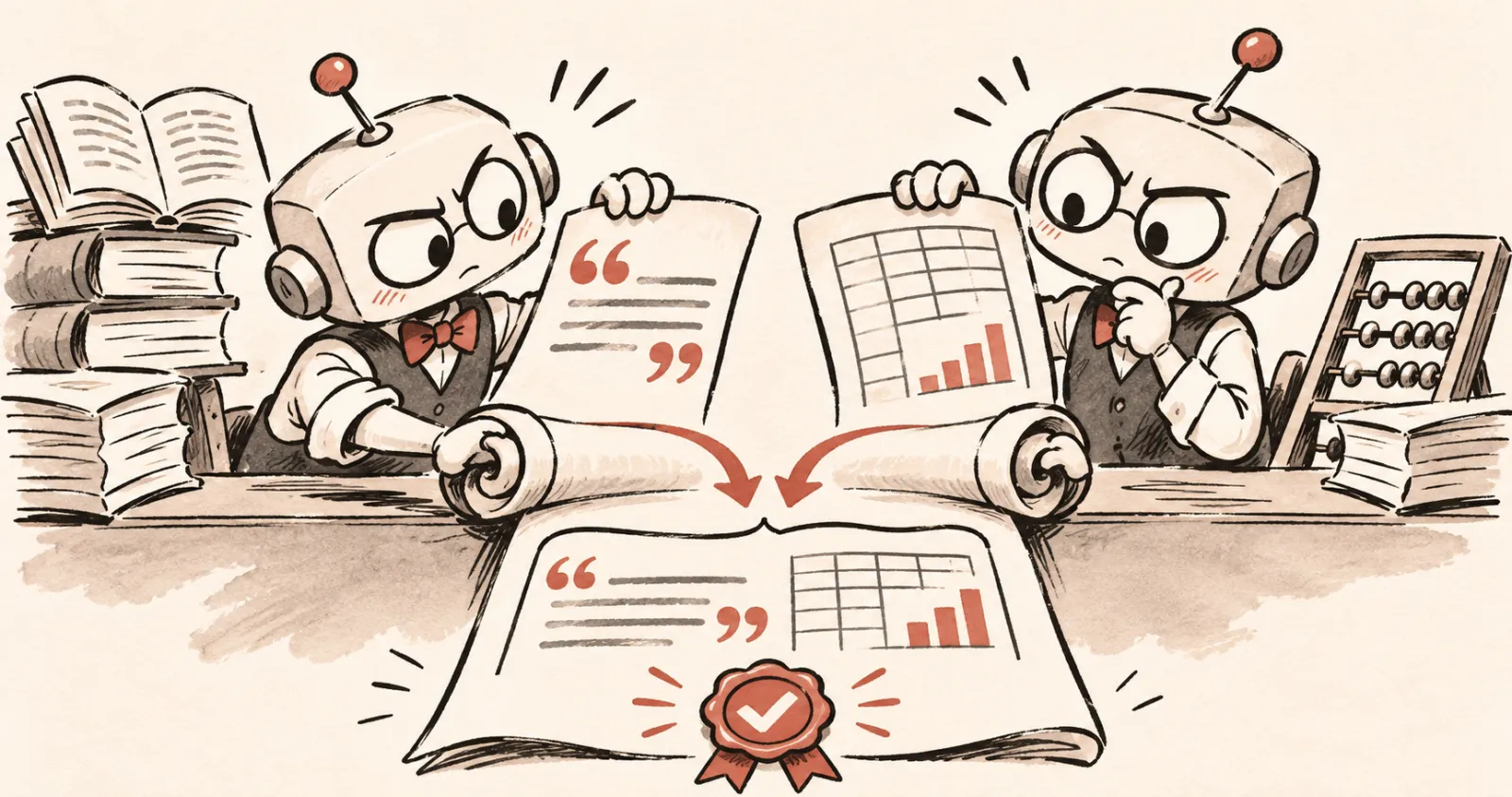
When engineering teams start building LLM automation, it is tempting to reach straight for a multi-agent diagram with separate roles such as "research agent," "drafting agent," and "review agent." On clean test runs, role separation looks structured and disciplined. In production, however, premature multi-agent splits routinely create three bottlenecks: end-to-end latency stretches by multiple seconds per handoff, token bills multiply because each agent re-ingests overlapping context, and diagnosing a bad final answer turns into guesswork across chained prompts. Both Anthropic Engineering and OpenAI's practical agent guide converge on the same starting rule: ship the simplest architecture that solves the task, and split into multiple agents only when measurable limits force your hand.
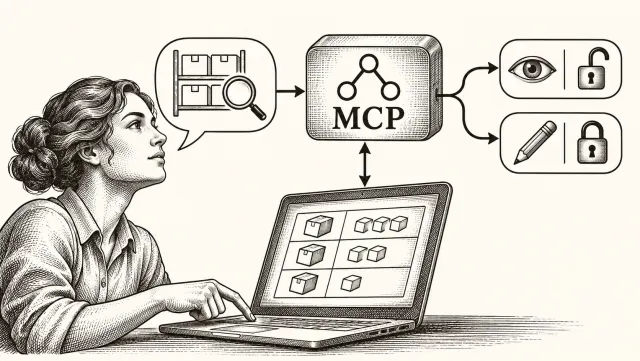
In "Building effective agents," Anthropic Engineering defines the foundational building block as an Augmented LLM: a single model paired with retrieval, memory, and an environment-feedback tool loop. OpenAI's "A practical guide to building agents" gives parallel guidance, advising teams to stay on a single-agent loop until clear complexity thresholds appear.
A disciplined single agent outperforms multi-agent setups across workflows with tightly coupled state and sequential dependencies:
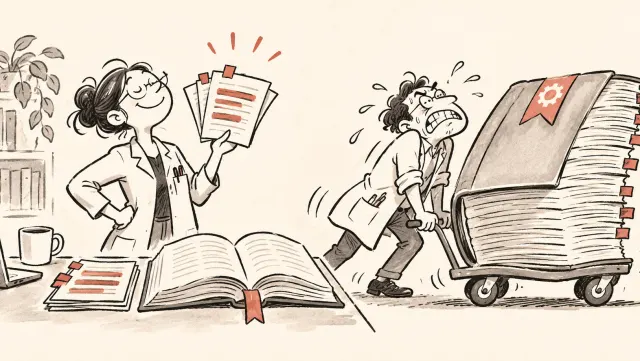
- Full context continuity without handoff loss: One agent keeps every prior tool result and observation in a single working window, avoiding lossy summaries between separate agent roles.
- Lower latency and fewer failure surfaces: Every extra agent invocation adds at least one additional LLM inference round-trip, compounding network wait time and sequential generation latency.
- Focused debugging inside one prompt and tool contract: Instead of tuning three system prompts and auditing cross-agent interactions, engineers refine function names, parameter schemas, and error messages in one place.
Many failures blamed on a single agent are actually tool-interface defects: vague function names, missing parameter constraints, or unhelpful error strings that leave the model guessing. Tightening tool definitions often fixes accuracy immediately without adding an orchestration layer.
Multi-agent coordination delivers genuine quality gains when a single agent hits clear cognitive, context, or security boundaries. Across Anthropic's workflow patterns and OpenAI's orchestration graph models, three patterns justify the extra complexity:
| Architecture Pattern | Coordination Mechanism | Best-Fit Workloads | Primary Cost & Trade-off |
|---|
| Single Agent (Tool Loop) | One LLM plans, calls tools, and reacts to environment feedback | Cohesive workflows under roughly 10 to 15 tools sharing continuous state | Accuracy drops if conflicting instructions and oversized tool schemas pile up |
| Orchestrator-Workers / Manager | Central agent dynamically splits work, invokes sub-agents as tools, and synthesizes output | Multi-file code changes with unknown scope, parallel multi-source research | Input token multiplication from passing instructions and context to each worker |
| Evaluator-Optimizer | One agent generates a draft; a second evaluates against explicit criteria in a loop | Strict technical translation, security-sensitive code review, compliance checks | Doubles or triples LLM call volume and sequential latency per request |
| Decentralized (Peer Handoffs) | Specialized agents transfer execution control directly to peer agents | Multi-tier customer support (triage, technical diagnostics, billing resolution) | Harder to enforce global state invariants across chained handoffs |
The real mechanism behind these patterns is context isolation and role separation. In Orchestrator-Workers or OpenAI's Manager pattern (where sub-agents are exposed as tools), each specialist worker sees only the narrow slice of data and tools required for its subtask, removing distraction from unrelated schemas. In Evaluator-Optimizer, separating generation from evaluation across independent calls reduces self-confirmation bias during critique.
Cost, Latency, and Debugging Traps to Avoid
Moving from one agent loop to a multi-agent graph does not scale overhead linearly; without strict boundaries, operational cost and failure modes compound quickly:
- 01Token multiplication across layers: Every specialist agent carries its own system instructions, tool schema definitions, and forwarded context summary. Passing full conversation history through four intermediate hops inflates input token volume dramatically even when the user receives a brief response.
- 02Sequential latency in user-facing paths: Chained Orchestrator or Evaluator loops stack inference time sequentially. Placing multi-turn evaluation loops behind synchronous-feeling live chat causes users to abandon sessions while waiting. Heavy multi-step critique loops belong in background queues rather than blocking interactive endpoints.
- 03Handoff drift ("telephone game" degradation): In decentralized peer handoffs or worker-to-manager summaries, critical edge details such as exact error codes, timestamps, or policy exceptions get paraphrased away before reaching the next node.
- 04Root-cause blind spots in production: When the final response is wrong, teams must know whether the Orchestrator decomposed the task poorly, a Worker misread a tool payload, or the Evaluator missed a rule. Without per-hop trace IDs and logged intermediate inputs and outputs, reproducing production regressions becomes guesswork.
Before approving a multi-agent design in production, technical teams should verify four practical gates:
- 01Prove single-agent saturation with evaluation data: Split roles only after cleaning up tool schemas, trimming conflicting prompt rules, and measuring real tool-selection failure or context overflow on an internal test set.
- 02Use deterministic code workflows before autonomous agent chatter: When execution order is fixed (for example: extract payload -> validate schema -> trigger internal API), write standard deterministic application code rather than asking multiple LLM agents to coordinate the sequence.
- 03Enforce hard loop caps and per-task token budgets: Every Orchestrator or Evaluator loop needs a strict step ceiling (
max_turns or iteration limit) and a deterministic fallback path if quality criteria are not met in time. - 04Instrument structured traces from day one: Record exact JSON payloads passed between nodes, per-agent latency, and token spend by role so bottlenecks can be isolated rapidly.
For organizations wiring LLM workflows directly into internal business data where accuracy, token spend, and auditability must stay balanced, architectural boundaries can be mapped early through IT architecture and infrastructure consulting.
Scope and Practical Limitations
This analysis synthesizes orchestration patterns documented in Anthropic Engineering's "Building effective agents" and OpenAI's "A practical guide to building agents" alongside ToanKhonTech's engineering architecture reviews; it does not report independent benchmark scores on a fixed dataset.
Two practical caveats apply in production. First, patterns such as Orchestrator-Workers and decentralized handoffs are frequently combined, and real-world reliability depends heavily on the instruction-following and tool-calling stability of the underlying model release. Second, the threshold where a single agent breaks down shifts as context handling and tool accuracy improve across model generations, so any decision to split or consolidate agents should be validated against an internal regression suite before broad rollout.