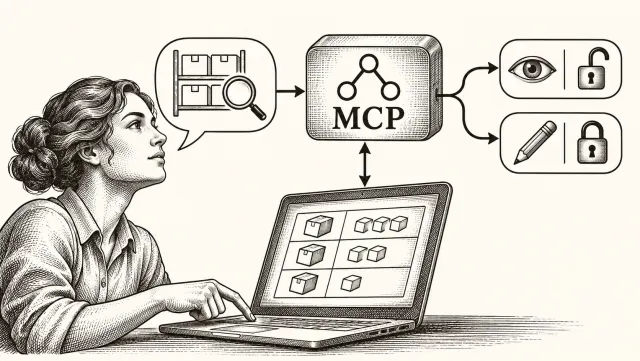
In most organizations, employees adopt browser-based AI chatbots to summarize meeting notes, draft customer responses, or debug snippets of internal code far faster than IT and security teams can publish formal governance policies. This Shadow AI pattern delivers immediate productivity gains, yet introduces silent exposure: customer personally identifiable information (PII), pricing sheets, API credentials, and legal clauses are pasted directly into external consumer accounts outside corporate audit boundaries.
As highlighted in the OWASP Top 10 for LLM Applications under LLM02: Sensitive Information Disclosure, unintended data exposure does not stem solely from model memorization during training. It also arises from third-party chat history retention, over-privileged retrieval-augmented generation (RAG) pipelines, and unredacted secrets embedded in user prompts. Rather than issuing blanket prohibitions that push staff onto personal devices, engineering leaders and IT consulting teams need practical technical guardrails: routing traffic through commercial no-training endpoints, stripping PII before inference, and governing usage under an established risk framework.
A frequent governance mistake is treating a free or individual monthly chat subscription as equivalent to an enterprise API deployment. Retention windows, model-training defaults, identity controls, and audit visibility differ substantially across deployment tiers:
| Technical and compliance dimension | Consumer chat account | Enterprise workspace chat (Team/Enterprise) | Commercial API with Zero Data Retention (ZDR) |
|---|
| Model training on user prompts | Often enabled by default unless manually opted out | Disabled by default under commercial terms | Disabled by default under commercial API terms |
| Prompt and response retention | Stored long-term in chat history and safety logs | Retained per tenant workspace policy (configurable) | Not written to disk after response delivery (subject to approved ZDR contract) |
| Centralized SSO and offboarding | No enterprise SSO support | SAML/OIDC SSO with centralized seat management | Enforced centrally at the internal AI gateway and key vault |
| Security audit logging | None for corporate security teams | Tenant-level administrative activity logs | Full request metadata and DLP logs inside corporate infrastructure |
| Suitability for customer PII | Unsuitable for internal records or PII | Suitable for general office workflows once training is disabled | Best suited for production systems and regulated data flows |
One critical engineering detail is often missed: even when an API provider contractually excludes customer data from model training, standard API endpoints frequently retain request and response logs for 14 to 30 days for abuse monitoring and trust-and-safety review. Organizations handling regulated financial, healthcare, or legal records should obtain a formal Zero Data Retention (ZDR) addendum or deploy models through private cloud endpoints (Private VPC) so raw payloads are never persisted on external storage.
Pre-prompt PII redaction and tokenization pipeline
A Zero Data Retention contract governs how the external provider handles traffic, but data minimization should still happen before a request crosses the network boundary. If an LLM only needs to summarize a support ticket or check contract structure, it rarely requires a customer's real name, national ID, or bank account number.
An internal AI gateway positioned between employee tools and upstream LLM providers should execute a four-stage redaction pipeline before forwarding any prompt:
- 01Deterministic pattern and checksum detection: Scan incoming text for structured identifiers such as national IDs, tax identification numbers, payment card numbers (validated with Luhn checks), email addresses, phone numbers, and software secrets (JWTs, cloud access keys, database connection strings).
- 02Lightweight boundary named-entity recognition (NER): Run a local NER model or NLP pipeline inside the corporate network to flag person names, company names, and street addresses embedded in unstructured prose.
- 03Reversible context-preserving tokenization: Replace matched values with typed placeholders such as
[CUSTOMER_NAME_1], [PHONE_1], or [CONTRACT_ID_1]. Store the ephemeral mapping table in an in-memory session store (such as Redis with a short 15-minute TTL) inside the corporate boundary. When the model returns its response, the gateway can rehydrate placeholders for authorized staff if the workflow requires it. - 04Authorization checks at the RAG retrieval layer: Consistent with OWASP LLM02 guidance, internal assistants connected to company knowledge bases must enforce document-level access control (RBAC or ABAC) inside the vector retrieval step. Filtering permissions prior to prompt assembly prevents an employee from querying an AI assistant and inadvertently receiving excerpts from restricted HR or executive files.
Governing Shadow AI with the NIST AI Risk Management Framework
Replacing ad-hoc rules with a structured control baseline is more manageable when mapped directly to the four core functions of the NIST AI Risk Management Framework (AI RMF 1.0): Govern, Map, Measure, and Manage.
- 01Govern (Policy and accountability): Define four explicit data classification tiers (Public, Internal, Restricted, Confidential) and specify which tiers may enter commercial workspace tools versus which must pass exclusively through the internal redacting AI gateway. Assign clear ownership for approving new AI vendors instead of allowing departments to expense unvetted browser tools.
- 02Map (Inventory and data-flow context): Inspect corporate DNS and proxy telemetry to discover Shadow AI usage across teams. Map each business workflow using LLMs (customer support, software engineering, legal review, HR) to identify where customer PII, regulated records, or proprietary source code enter prompts.
- 03Measure (Telemetry and DLP metrics): Deploy browser-level or network DLP rules that warn or block staff when pasting large source-code blocks or CSV customer exports into public consumer AI sites. Track monthly gateway metrics, including redaction trigger rates, blocked policy violations, and adoption of the approved internal chat portal.
- 04Manage (Mitigation and incident response): Provide an intuitive, low-friction internal chat interface backed by ZDR APIs so employees have no incentive to bypass security controls. Establish a rapid incident playbook: if a credential or sensitive dataset is accidentally pasted into a public chat app, immediately revoke and rotate exposed keys, assess scope, and update gateway detection rules.
Scope, caveats, and operational limitations
The architecture patterns and control checklist in this guide draw upon the NIST AI Risk Management Framework, the OWASP Top 10 for LLM Applications, and ToanKhonTech's engineering experience designing enterprise AI gateways. This material serves as technical practice guidance rather than formal legal counsel for jurisdiction-specific privacy statutes.
Engineering and security teams should account for three practical constraints during rollout. First, retention durations and Zero Data Retention eligibility vary across AI vendors, billing tiers, and regional hosting options; legal and security teams must verify the signed Data Processing Addendum (DPA) rather than relying on marketing summaries. Second, automated PII detection is never 100% exhaustive on ambiguous free-form text, indirect identifiers, or unparsed screenshots. Third, gateway-level redaction works best when paired with regular employee training and an approved internal AI workspace that matches the speed and usability of consumer tools.